


What's Happening?
In 2005, actor Adam Sandler was offered the lead role in an action-comedy film then titled 'Wichita.' Sandler declined the role, stating he couldn't envision himself with a gun in his hand. This marked his first offer for a major action role in nearly
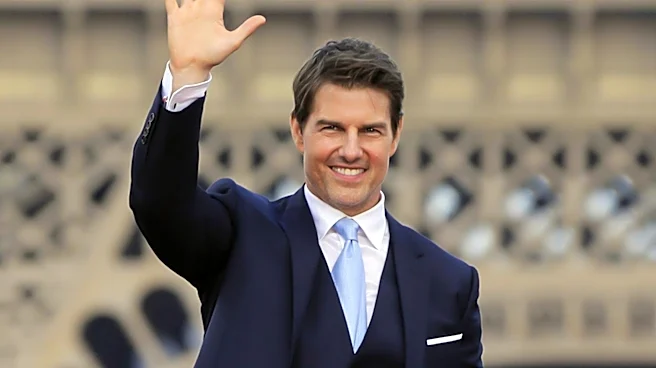
a decade, following his 1996 action-comedy 'Bulletproof,' which performed poorly. After Sandler's refusal, the role was offered to Chris Tucker, who also eventually dropped out. The film, which underwent a title change to 'Trouble Man' and later 'Knight and Day,' eventually cast Tom Cruise in the lead role alongside Cameron Diaz. Directed by James Mangold, 'Knight and Day' was released in 2010. Despite Cruise's involvement, the film had a modest box office performance and is considered one of his less memorable action features. This decision highlights Sandler's career trajectory, which has seen him evolve from primarily comedic roles to include critically recognized dramatic performances, as well as ventures into science fiction with films like Netflix's 'Spaceman.'
Why It's Important?
This casting decision illustrates a significant moment in Adam Sandler's career, showcasing his deliberate choices in role selection that have shaped his public persona and acting trajectory. By declining a major action role, Sandler reinforced his preference for genres where he felt more comfortable, primarily comedy, before later expanding into drama. This choice also highlights the fluidity of Hollywood casting, where a role initially envisioned for one actor can ultimately define another's filmography. For Tom Cruise, taking on 'Knight and Day' added another action film to his extensive resume, though it did not achieve the same critical or commercial success as some of his other projects. The story underscores how an actor's self-perception and willingness to step outside their established comfort zone can influence not only their own career but also the broader landscape of film production and audience expectations. It also subtly points to the industry's evolving perception of actors, as Sandler later gained recognition for his dramatic capabilities, a shift that might have seemed unlikely at the time of this particular casting decision.
What's Next?
While this specific casting decision is historical, its implications for Adam Sandler's career path suggest a continued focus on projects that align with his evolving artistic interests. Having established a successful partnership with Netflix, Sandler is likely to continue producing and starring in a variety of films, potentially exploring more dramatic or genre-bending roles that challenge audience expectations. For Tom Cruise, his established brand as a leading action star remains strong, and he is expected to continue headlining major action franchises. The broader trend in Hollywood may see more actors, like Sandler, diversifying their portfolios beyond their initial typecasting, driven by both personal artistic growth and audience demand for more complex performances. Future projects for both actors will likely reflect their established career trajectories, with Sandler continuing his diverse output and Cruise maintaining his status in high-octane action cinema.
Beyond the Headlines
The narrative of Adam Sandler declining a role that eventually went to Tom Cruise offers a deeper look into the strategic decisions actors make regarding their careers and public image. Sandler's stated reason—'I just don't see myself with a gun in my hand'—reflects a conscious effort to maintain a certain brand identity, which at the time was heavily rooted in comedy. This decision, in retrospect, allowed him to avoid a potentially ill-fitting role and later pivot to more critically acclaimed dramatic performances, demonstrating a long-term vision for his career beyond immediate box office potential. It also highlights the industry's tendency to pigeonhole actors and the challenges they face in breaking out of established molds. The eventual casting of Cruise, a quintessential action star, underscores Hollywood's reliance on established archetypes for genre films. This case serves as a micro-example of how individual artistic choices can subtly influence the broader cultural perception of actors and the types of roles they are expected to play, ultimately shaping their legacy in the entertainment industry.