







What's Happening?
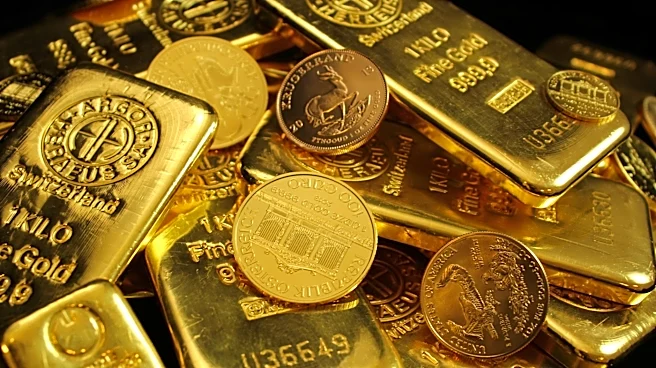
Gold's spot price has increased to $4,050.07 per ounce as of 9:00 a.m. ET, according to CNBC's Gold/US Dollar Spot Price. This marks a slight rise from the previous day's price of $4,009.41 per ounce. Gold is traditionally viewed as a safe-haven asset,
attracting investors during times of economic and political instability due to its reliability as a store of value and its effectiveness as a hedge against inflation. Despite lacking the ability to earn dividends, gold remains a popular investment choice, with various methods available for adding it to portfolios, including purchasing physical gold, gold IRAs, and gold ETFs.
Why It's Important?
The rise in gold prices underscores the ongoing economic uncertainty and the demand for stable investment options. As a hedge against inflation and market volatility, gold provides a sense of security for investors. This trend reflects broader concerns about economic stability and the potential for market downturns. The increased interest in gold IRAs and ETFs indicates a shift towards more secure, long-term investment strategies. This could impact financial markets by driving up demand for gold, influencing prices, and affecting related industries such as mining and refining.
What's Next?
Investors are likely to continue seeking gold as a protective measure against economic fluctuations. The trend towards gold IRAs and ETFs may grow, offering tax benefits and reducing the pressures of physical storage. Financial advisors and investment firms might see increased interest in gold-related products, prompting them to expand their offerings. Additionally, the gold market could experience further price increases if economic instability persists, affecting global supply chains and investment strategies.
Beyond the Headlines
The rising gold prices highlight deeper economic concerns, such as inflation and geopolitical tensions, which drive investors towards safe-haven assets. This trend may lead to increased scrutiny of monetary policies and their impact on inflation rates. Furthermore, the reliance on gold as a stable investment could influence cultural perceptions of wealth preservation and financial security, potentially altering investment behaviors and priorities in the long term.