



What's Happening?
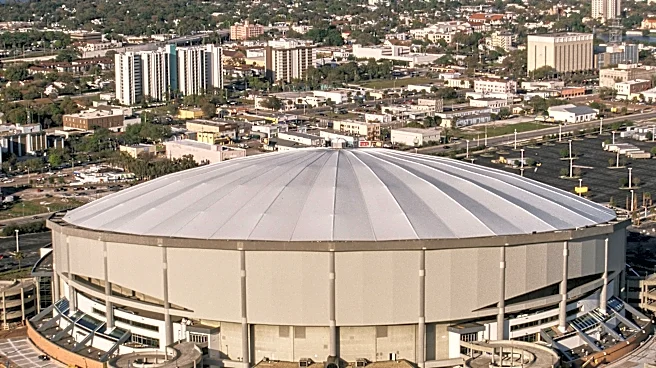
The Tampa Bay Rays' proposed new stadium deal is approaching a critical August deadline for an agreement, though negotiations may extend beyond this timeline. The Rays aim for a September groundbreaking and a 2029 opening. Memorandums of understanding
were signed in May by the Rays, the City of Tampa, and Hillsborough County, outlining the project's framework. However, significant details remain unresolved, and the final deal requires sufficient support from the Tampa City Council. The Rays have committed $1.2 billion to the project and were initially seeking $976 million in public contributions, with $796 million from the county and $180 million from the city. This public funding is proposed to come from an $80 million half-cent sales tax and $100 million from the Community Redevelopment Agency. Tampa Mayor Jane Castor expressed confidence in the deal's approval but acknowledged the complexity of negotiations, stating that some aspects cannot be rushed. Rays owner Ken Babby has been meeting with council members to garner support.
Why It's Important?
This stadium deal carries substantial implications for the Tampa Bay region's economy, infrastructure, and public finances. The proposed public contribution of nearly $1 billion raises questions about the allocation of taxpayer money versus other pressing city needs, such as infrastructure maintenance. Tampa City Council member Bill Carlson has voiced opposition to the current agreement, citing existing infrastructure expenses and proposing an alternative plan to fund the stadium through property taxes generated by the Rays' multi-use development. Carlson's plan suggests generating up to $2 billion for roads and flood prevention over 35 years without raising taxes, potentially freeing up other funds. The outcome of these negotiations will determine not only the future of the Rays in Tampa but also the financial burden and benefits for local residents and businesses. The project's success could stimulate economic activity and development, while its failure could lead to the team's relocation and a missed opportunity for urban revitalization.
What's Next?
The Tampa City Council has only two scheduled meetings remaining before the Rays' preferred end-of-August deadline, making the timeline for a final agreement increasingly tight. Attorneys and other parties are actively working through the details, and discussions with local lenders regarding financing are ongoing. If negotiations extend beyond August, it remains unclear how this would impact the Rays' planned September groundbreaking. The team has not commented on the August 30 deadline. The proposal by Council member Bill Carlson to use property taxes from the multi-use development for stadium funding could become a key point of discussion, potentially addressing concerns about infrastructure costs. The coming weeks will be crucial for all parties involved to reach a consensus that satisfies both the team's timeline and the city's financial and infrastructural needs.
Beyond the Headlines
The debate surrounding the Rays stadium deal highlights a broader national challenge faced by cities balancing the economic benefits of professional sports franchises with the financial responsibilities to their taxpayers. The reliance on public funding for private sports ventures often sparks controversy, raising questions about equitable resource allocation and long-term urban planning. The proposed multi-use development alongside the stadium suggests a trend towards integrating sports venues into larger commercial and residential hubs, aiming for sustained economic impact beyond game days. However, the success of such developments hinges on careful planning and community buy-in. The outcome in Tampa could set a precedent for how similar large-scale public-private partnerships are negotiated and perceived in other U.S. cities, particularly concerning the use of sales tax and community redevelopment funds for sports facilities versus essential public services.