





What's Happening?
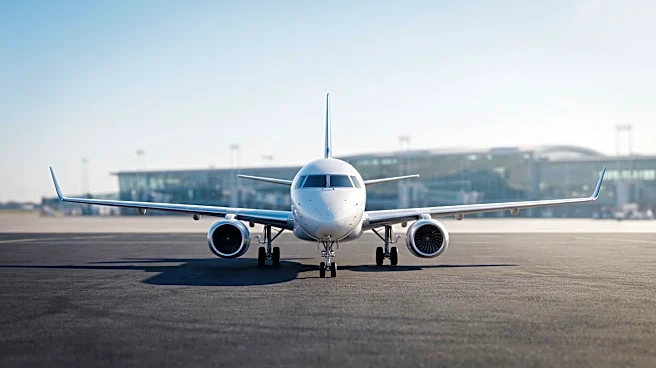
Japan Airlines (JAL Group) has selected the Embraer E190-E2 aircraft to modernize its fleet, specifically for its regional subsidiary J-AIR Co., Ltd. The order includes sixteen firm aircraft and ten options, with deliveries scheduled to commence in fiscal
year 2029. These new jets will replace J-AIR's existing fleet of first-generation E170 and E190 aircraft, which currently comprises 32 jets (18 E170s and 14 E190s) operating from Osaka International Airport (Itami). This decision aligns with JAL Group's 'JAL Group Management Vision 2035' strategy, aimed at maintaining and developing a sustainable domestic network as essential social infrastructure and supporting regional revitalization. The E190-E2 aircraft, with a standard capacity of 97 to 114 seats and a range of 5,463 km, will be powered by two Pratt & Whitney PW1900G engines. The airline has not yet detailed the cabin configuration but expects increased capabilities compared to the previous generation E1-Jets.
Why It's Important?
This fleet upgrade by JAL Group is significant for several reasons. The transition to Embraer E2-Jets from the older E170/E190 models is driven by the need for lower fuel consumption, a significant reduction in CO2 emissions, and decreased noise levels for both passengers and communities near airports. These factors contribute to environmental sustainability and operational efficiency, which are crucial in the aviation industry. Furthermore, the new aircraft are expected to offer lower maintenance costs due to improved reliability and component durability, as well as savings from fleet commonality. The decision also highlights a strategic move to fill a decade-long gap in JAL's regional fleet planning, following the cancellation of the Mitsubishi SpaceJet program. By adopting the E190-E2, JAL Group aims to enhance its domestic network, which is vital for supporting local economies and daily life in Japanese communities, especially in the face of declining domestic business travel, an aging population, and rising operating costs.
What's Next?
Deliveries of the Embraer E190-E2 jets to J-AIR are slated to begin in fiscal year 2029. This will initiate a phased replacement of the current E170 and E190 fleet. JAL Group will likely proceed with detailed cabin configuration planning for the new aircraft to maximize passenger comfort and operational efficiency. The successful integration of these new jets will be a key step in achieving the objectives outlined in the 'JAL Group Management Vision 2035,' focusing on a sustainable domestic network and regional revitalization. The move also positions Embraer as a dominant player in Japan's regional jet market, as its E2-Jets have now been selected by both major Japanese airline groups, JAL and ANA Airways. This could lead to further consolidation of Embraer's market share in the region and potentially influence other airlines' fleet modernization strategies.
Beyond the Headlines
The selection of the Embraer E190-E2 by JAL Group underscores a broader trend in the aviation industry towards more fuel-efficient and environmentally friendly aircraft. This shift is not merely an operational upgrade but reflects a growing global emphasis on sustainability and reduced carbon footprint. The move away from the domestically developed Mitsubishi SpaceJet program, which was ultimately canceled, highlights the intense competition and high barriers to entry in the commercial aircraft manufacturing sector. For Japan, relying on foreign manufacturers for regional jets after the failure of its own program could have implications for its aerospace industry's future development and technological independence. The long-term success of JAL's strategy will depend on how effectively these new aircraft can address the demographic and market challenges, such as a shrinking and aging population and evolving travel patterns, while maintaining profitability and service quality.