





What's Happening?
Dr. Cory Calendine, a board-certified orthopedic surgeon, highlights that plantar fasciitis exercises are a highly effective and accessible home treatment for heel pain. Plantar fasciitis, which affects over a million U.S. patients annually, involves
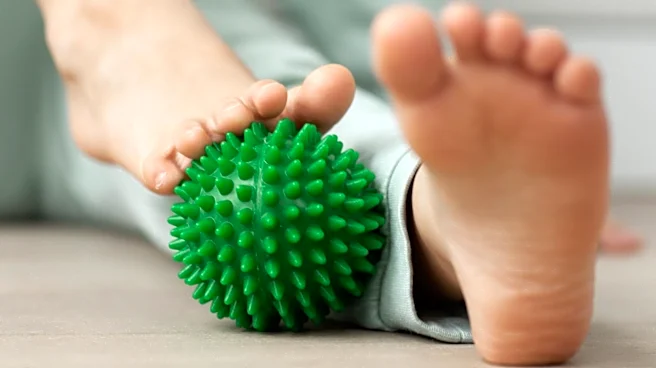
irritation of the thick tissue band running from the heel to the toes. The exercises aim to loosen tight tissues and strengthen arch-supporting muscles. Key stretches include seated toe stretches, straight-leg calf stretches, calf wall stretches, and stair stretches. Strengthening exercises like heel raises and towel scrunches are also crucial. Dr. Calendine emphasizes that these exercises, often requiring minimal equipment like a towel or a wall, are a first-line treatment alongside supportive footwear and rest from high-impact activities. He notes that while pain relief can take several months, consistent daily stretching and every-other-day strengthening are vital.
Why It's Important?
The emphasis on home-based exercises for plantar fasciitis is significant for U.S. healthcare, as it empowers individuals to manage a common and often debilitating condition without immediate reliance on costly medical interventions. With over a million patient visits annually for plantar fasciitis, accessible and effective self-care strategies can reduce healthcare burdens and improve patient outcomes. Dr. Calendine's guidance underscores that these low-risk, free exercises are a foundational component of treatment, often working best when combined with supportive shoes and reduced high-impact activity. This approach can lead to earlier intervention, potentially preventing the condition from worsening and improving the quality of life for many Americans suffering from chronic heel pain. The long-term benefits of consistent exercise also help prevent recurrence, a common issue with plantar fasciitis.
What's Next?
Individuals experiencing heel pain are encouraged to incorporate a daily stretching routine, ideally two to three times a day, and heel raises every other day. The Cleveland Clinic recommends at least 10 minutes of stretching daily. Dr. Calendine suggests integrating these exercises into existing daily habits, such as morning routines or lunch breaks, to ensure consistency. While exercises are effective, individuals should avoid high-impact activities that exacerbate pain. If heel pain persists after a few weeks of home care, or if symptoms like swelling, numbness, or pain at rest occur, consulting a doctor or physical therapist is recommended. This proactive approach ensures that individuals receive appropriate care and can tailor their exercise regimen to their specific needs.
Beyond the Headlines
The widespread prevalence of plantar fasciitis and the effectiveness of simple home exercises highlight a broader public health challenge and opportunity. Many common musculoskeletal conditions can be significantly improved or prevented through consistent, low-cost physical activity. The advice from Dr. Calendine not only provides practical steps for managing plantar fasciitis but also subtly advocates for a more active and self-aware approach to physical health. This focus on self-management can reduce the strain on healthcare systems and foster greater individual autonomy in health decisions. It also underscores the importance of patient education in chronic pain management, moving beyond a purely clinical model to one that integrates lifestyle and preventative measures. The long-term adherence to these routines, even after pain subsides, is crucial for preventing recurrence, emphasizing the need for sustained behavioral change.