





What's Happening?
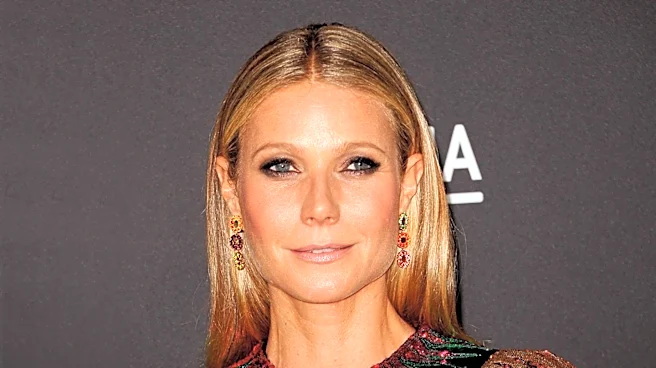
Actress Gwyneth Paltrow recently discussed her past romantic relationship with Brad Pitt, which spanned from 1994 to 1997, during an appearance on the podcast 'Friends Keep Secrets'. Paltrow revealed that her initial attraction to Pitt began when she
saw him in the film 'Thelma & Louise' as a child, considering him 'the most handsome man'. Their paths crossed professionally in 1994 on the set of the thriller 'Seven', where they played a married couple. Paltrow, then 22, and Pitt, 31, experienced what she described as 'love at first sight'. Their relationship quickly became a significant public event, leading to an engagement in 1996. However, the engagement was called off in 1997. Paltrow shared that the intense media attention surrounding their romance and subsequent breakup made the experience particularly challenging, leading to feelings of disappointment and 'extra shame' because the relationship did not work out. She noted that her rising fame coincided with being known as Pitt's girlfriend, making the public scrutiny overwhelming.
Why It's Important?
Paltrow's candid reflections offer insight into the pressures faced by high-profile individuals in the entertainment industry, particularly concerning their personal lives. Her experience highlights how media attention can amplify the emotional toll of a breakup, transforming a private matter into a public spectacle. This narrative underscores the broader societal impact of celebrity culture, where personal relationships become subjects of widespread public interest and commentary. For actors and public figures, managing their personal lives under constant scrutiny can be a significant challenge, affecting their mental well-being and public perception. The 'shame' Paltrow described points to the added burden of perceived failure when a highly publicized relationship ends, suggesting that public expectations and media narratives can create an environment where personal setbacks are magnified and judged. This also sheds light on the evolution of celebrity privacy and media ethics over the decades, as the intensity of public interest in celebrity relationships has only grown with the advent of social media.
What's Next?
While Paltrow's comments are retrospective, they contribute to an ongoing dialogue about celebrity privacy and the impact of media on personal lives. Her continued openness about past experiences, including her current friendly relationship with Pitt, may encourage other public figures to share their own stories, potentially fostering a more nuanced understanding of the challenges they face. The discussion also reinforces the enduring public fascination with celebrity relationships, suggesting that such narratives will continue to be a significant part of entertainment news. For Paltrow, these reflections are part of her broader public persona, which includes her lifestyle brand Goop, indicating a continued engagement with public discourse on personal well-being and life experiences. Her current marriage to Brad Falchuk, whom she describes as the 'love of her life,' provides a contemporary context to her past reflections, showcasing personal growth and evolving perspectives on relationships.
Beyond the Headlines
Paltrow's account delves into the psychological and emotional dimensions of celebrity relationships, particularly the feeling of 'extra shame' associated with a public breakup. This goes beyond mere gossip, touching upon the societal pressure to maintain a perfect public image and the personal cost when that image falters. The narrative also subtly highlights the gendered aspect of media scrutiny, where women in the public eye often face more intense judgment regarding their relationships and personal choices. Her reflection on being 'famous for being his girlfriend' even as her own career was ascending speaks to the historical tendency to define women by their male partners, a dynamic that continues to be debated in contemporary media. Furthermore, the enduring friendship between Paltrow and Pitt, despite their past, offers a counter-narrative to the often-dramatic portrayals of celebrity breakups, suggesting that amicable separations are possible even under intense public pressure. This aspect could influence public perceptions of post-relationship dynamics among celebrities.