






What's Happening?
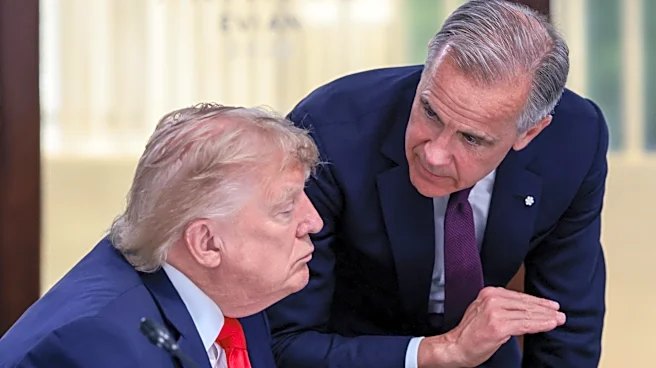
President Trump has announced a temporary pause on planned 50% tariffs against $20 billion worth of Canadian imports. The tariffs, which were scheduled to take effect, have been halted for a three-day period after the U.S. and Canada reached a last-minute
deal. This agreement provides both nations with additional time to negotiate a broader trade agreement. President Trump confirmed the deal on social media, stating that it is subject to the finalization of documents. The tariffs would have impacted approximately 5% of Canadian exports to the United States, covering a range of products from hockey sticks to tongue depressors. Canada had previously indicated it would retaliate, raising concerns about an escalation in trade tensions between the two close trading partners. The dispute arises amidst already strained U.S.-Canada relations under President Trump's administration.
Why It's Important?
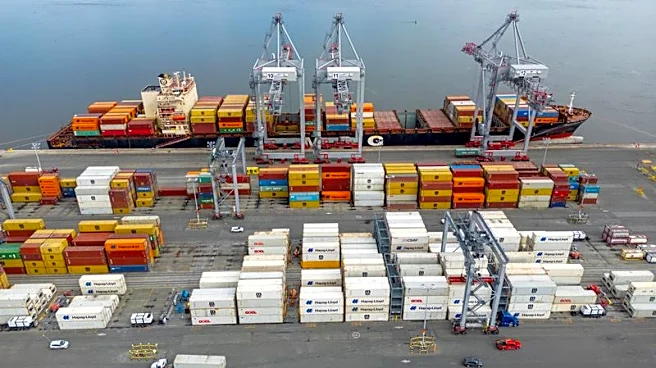
This development is significant because it temporarily averts a major escalation in trade tensions between the United States and Canada, two of the world's largest trading partners. The imposition of 50% tariffs on Canadian goods would have had substantial economic repercussions for both countries. For Canada, which sends nearly 72% of its goods exports to the U.S., such tariffs could severely impact its economy. U.S. consumers and businesses could also face higher prices as importers pass on tariff costs. The pause in tariffs offers a window for negotiation, potentially preventing a trade war that could disrupt supply chains, increase costs for consumers, and harm industries reliant on cross-border trade. The ongoing trade disputes, including those related to steel, aluminum, and softwood lumber, highlight the fragility of economic relations despite the close geographical and historical ties between the two nations.
What's Next?
The immediate next step involves the finalization of documents related to the deal, which will determine the specifics of the tariff pause and the framework for future negotiations. Over the next three days, U.S. and Canadian officials are expected to work on solidifying the agreement and outlining a path forward for broader trade discussions. These negotiations will likely address existing trade grievances, including U.S. tariffs on Canadian steel, aluminum, and softwood lumber, as well as U.S. demands for greater Canadian purchases of military equipment and access to critical minerals. The outcome of these talks will also influence the ongoing negotiations surrounding the U.S.-Mexico-Canada Agreement (USMCA), the North American trade pact. The temporary nature of the pause means that if a comprehensive agreement is not reached, the tariffs could still be implemented, leading to renewed trade friction.
Beyond the Headlines
Beyond the immediate economic implications, this tariff dispute underscores the evolving dynamics of international trade relations and the use of tariffs as a negotiating tool. President Trump's invocation of Section 338 of the U.S. Tariff Act of 1930, a provision never previously used in this context, highlights a more aggressive approach to trade policy. The repeated discussions about making Canada the 51st U.S. state, while perhaps rhetorical, reflect a broader sentiment of U.S. dominance in the bilateral relationship. The dispute also brings to light the interconnectedness of the U.S. and Canadian economies, with nearly 330,000 people and $2 billion worth of goods crossing their shared border daily. Any significant disruption to this flow has far-reaching consequences, affecting not only large corporations but also small businesses and individual consumers on both sides of the border. The resolution of this specific tariff issue could set a precedent for how future trade disagreements are handled.