







What's Happening?
Significant advancements in autonomous technology are being made across the logistics sector, with successful trials in land, air, and sea transport. Bot Auto completed a 230-mile commercial truckload delivery without a safety driver, marking a milestone
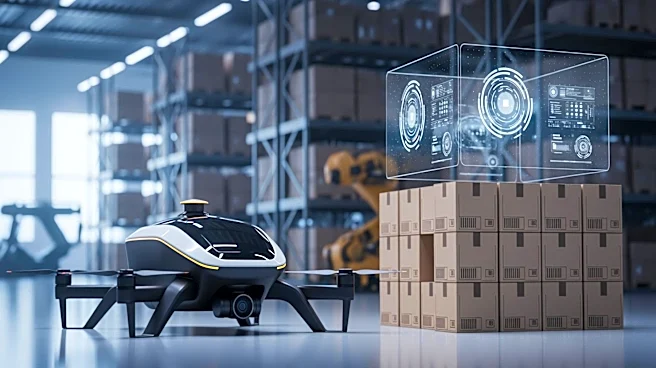
in over-the-road autonomy. AIR, a smart aircraft manufacturer, conducted the first flight of its heavy-lift unmanned aerial system, designed for logistics missions. Additionally, AI navigation technology was tested on a containership, demonstrating high precision in object detection. These developments highlight the growing role of automation in logistics.
Why It's Important?
The successful implementation of autonomous technology in logistics could revolutionize the industry by increasing efficiency, reducing costs, and enhancing safety. Autonomous vehicles and systems can operate continuously without human intervention, potentially leading to faster delivery times and lower operational expenses. This shift could also address labor shortages in the logistics sector. However, widespread adoption may face challenges, including regulatory hurdles, technological reliability, and public acceptance. The advancements in autonomy could also impact employment, as traditional roles may evolve or diminish.
Beyond the Headlines
The integration of autonomous technology in logistics raises ethical and legal questions regarding liability and safety standards. As these technologies become more prevalent, there will be a need for updated regulations and industry standards to ensure safe and fair practices. The environmental impact of autonomous systems, particularly in terms of energy consumption and emissions, will also be a consideration. Long-term, the shift towards automation could lead to a reimagining of supply chain strategies and infrastructure, influencing global trade patterns.