






What's Happening?
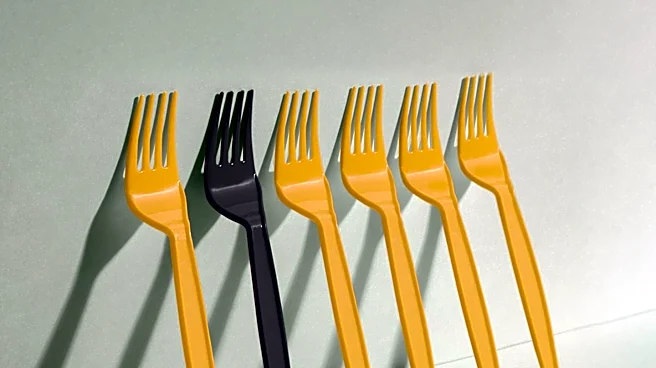
Homeowners are increasingly using plastic forks as a non-toxic and inexpensive method to deter common garden pests, such as raccoons and pets, from damaging plants. By sticking plastic forks, prong-side up, around vulnerable plants, gardeners create an unfriendly
territory that discourages animals from prowling and potentially causing minor injuries. This method is presented as a handy, inexpensive, and animal-friendly alternative to traditional pest control tactics like traps or chemical repellents. While effective against larger critters, this hack is not suitable for tiny insects like aphids or mites. Additionally, the forks can be painted and used as plant labels, with neutral colors potentially offering an added deterrent effect as some pests are less attracted to these shades.
Why It's Important?
This simple gardening hack reflects a growing trend among U.S. homeowners towards more environmentally conscious and humane pest control methods. The reliance on non-toxic solutions reduces the use of chemical pesticides, which can have detrimental effects on local ecosystems, beneficial insects, and even human health. For consumers, this offers a cost-effective way to protect their gardens without investing in expensive or potentially harmful products. The adoption of such methods can contribute to healthier urban and suburban environments, promoting biodiversity and reducing chemical runoff into water systems. It also empowers individuals to take a more active role in sustainable living practices, aligning with broader societal shifts towards eco-friendly solutions.
What's Next?
As awareness of environmentally friendly gardening practices grows, similar non-toxic and DIY pest deterrents are likely to gain popularity. This trend could lead to increased demand for inexpensive, reusable, or upcycled materials for gardening purposes. Manufacturers of gardening supplies might explore developing more sustainable and animal-friendly pest control products that align with these consumer preferences. Educational resources for gardeners may also expand to include more information on integrated pest management strategies that prioritize ecological balance and minimize harm to wildlife. The success of simple solutions like plastic forks could inspire further innovation in accessible and sustainable home and garden care.
Beyond the Headlines
The use of plastic forks as a garden deterrent subtly highlights the dual nature of plastic in modern society. While plastic waste is a significant environmental concern, this application demonstrates a creative repurposing that extends the life cycle of an otherwise disposable item, albeit temporarily. This practice touches upon the broader concept of circular economy principles, where waste materials are given new utility. It also reflects a cultural shift towards resourcefulness and practical problem-solving at the household level, driven by both economic considerations and a desire for more sustainable living. The ingenuity in finding new uses for common objects can inspire further thought on how everyday items can be repurposed to address various challenges, reducing waste and fostering innovation.