







What's Happening?
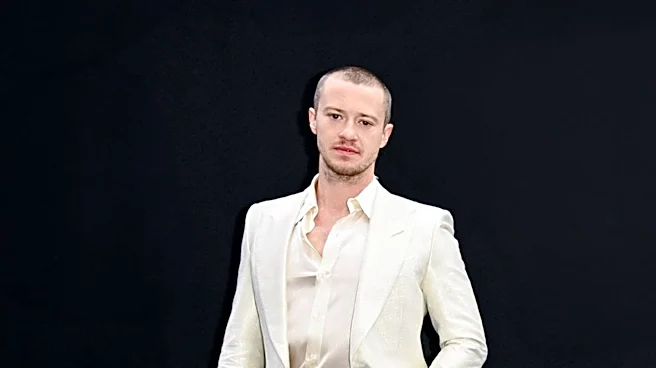
Benjamin Voisin is set to star in the upcoming drama film "The Hunchback, Soul of Paris," directed by Jean-François Richet. The movie, also known as "Quasimodo, l'âme de Paris" in French, is a new live-action adaptation of Victor Hugo's classic novel,
"The Hunchback of Notre Dame." Set in Paris in 1830, the narrative unfolds amidst a city grappling with cholera and revolution. Voisin plays the role of a doctor in the film, which centers on a hunchbacked stonemason, portrayed by Vincent Cassel, who is hunted by the police. This stonemason risks everything to save a dancer he has fallen in love with, an act that ultimately inspires Hugo's legendary character. The cast also includes Daphné Patakia as Agnès and Karim Leklou as the Director of Security. The screenplay was written by Éric Besnard and Edgar Marie, with Clément Miserez and Matthieu Warter producing. Netflix is scheduled to release "The Hunchback, Soul of Paris" globally on November 27, 2026.
Why It's Important?
The release of "The Hunchback, Soul of Paris" on Netflix signifies the continued global appeal and adaptation of classic literary works for contemporary audiences. This French production, featuring a notable cast including Benjamin Voisin and Vincent Cassel, highlights Netflix's strategy of acquiring and distributing international content, enriching its diverse library. For the U.S. audience, it provides access to foreign-language cinema that might otherwise have limited theatrical release, contributing to cultural exchange and broadening cinematic tastes. The film's themes of love, sacrifice, and societal turmoil, set against a historical backdrop, resonate universally, offering a dramatic narrative that explores human resilience and compassion. The involvement of acclaimed director Jean-François Richet also adds to the film's potential impact, drawing in viewers familiar with his previous works and further solidifying Netflix's position as a platform for quality international productions.
What's Next?
Following its global premiere on Netflix on November 27, 2026, "The Hunchback, Soul of Paris" will become available to a vast international audience, including subscribers in the U.S. The film's release will likely generate discussions and reviews, contributing to its visibility and potential for critical acclaim. As with many Netflix originals and acquisitions, its performance on the platform, measured by viewership numbers and audience engagement, could influence future investment in similar international literary adaptations. The film's success may also further elevate the profiles of its stars, Benjamin Voisin and Vincent Cassel, and director Jean-François Richet, potentially leading to more international collaborations. Additionally, the release could spark renewed interest in Victor Hugo's original novel and its numerous adaptations, encouraging audiences to explore the enduring legacy of this classic story.
Beyond the Headlines
The continuous re-adaptation of classic literature like Victor Hugo's "The Hunchback of Notre Dame" into modern cinematic forms, such as "The Hunchback, Soul of Paris," reflects a broader cultural trend of reinterpreting foundational narratives for new generations. This particular adaptation, set in 1830 Paris amidst cholera and revolution, offers a lens through which contemporary audiences can reflect on themes of social injustice, prejudice, and the human condition that remain relevant today. The choice to release it on a global streaming platform like Netflix underscores the evolving landscape of film distribution, where geographical boundaries are increasingly blurred, allowing diverse stories to reach a worldwide audience instantly. This accessibility not only enriches the global cinematic dialogue but also challenges traditional notions of national cinema, fostering a more interconnected cultural experience. The film's exploration of a character ostracized by society, yet capable of profound love and heroism, continues to resonate, prompting viewers to consider societal perceptions of beauty, difference, and humanity.