








What's Happening?
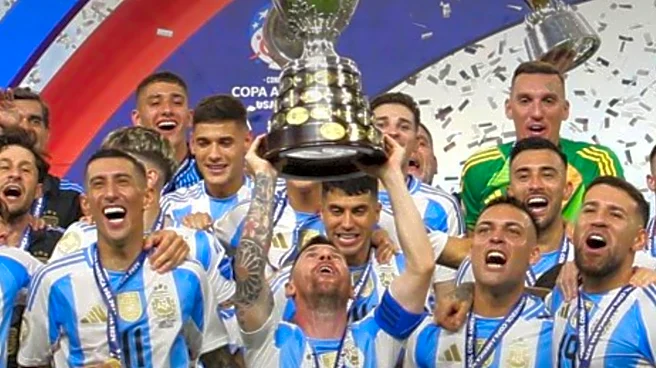
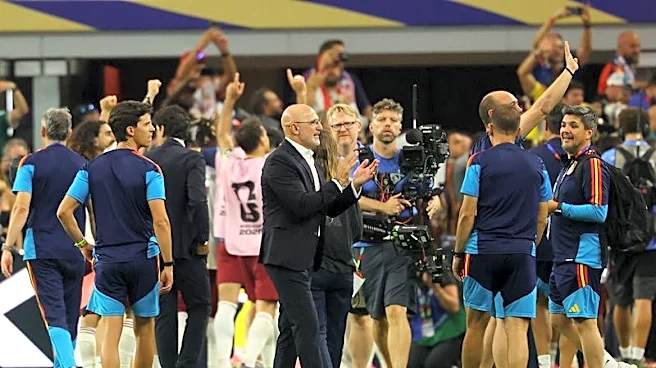
Luis de la Fuente and Lionel Scaloni, managers of Spain and Argentina respectively, have outperformed high-profile coaches like Thomas Tuchel and Carlo Ancelotti at the World Cup. Despite lacking top-flight club management experience, both have led their
teams to the World Cup final. Scaloni has transformed Argentina since taking over in 2018, leading them to multiple tournament victories. De la Fuente has similarly revitalized Spain, winning the European Championship in 2024 and the Nations League in 2023. Their success challenges the notion that international success requires club-level pedigree, highlighting the importance of team spirit and tactical acumen.
Why It's Important?
The achievements of De la Fuente and Scaloni underscore a shift in what constitutes effective international football management. Their success suggests that fostering team unity and adapting tactics to suit international play can be more crucial than having a high-profile club management background. This could influence how national teams select future managers, potentially valuing those with experience in youth development and international settings over those with club success. The performance of these managers may also prompt a reevaluation of coaching strategies and player management at the international level.
What's Next?
As the World Cup final approaches, the strategies employed by De la Fuente and Scaloni will be closely analyzed. Their approaches may set new standards for international management, influencing how other national teams approach coaching appointments. The outcome of the final could further validate their methods, potentially leading to increased opportunities for managers with similar backgrounds. Additionally, their success may inspire other nations to invest more in youth development and internal promotions within their coaching ranks.