







What's Happening?
Wang Chuanfu, Chairman of BYD, recently met with Philippine President Ferdinand R. Marcos Jr. to discuss the expansion of BYD's presence and the acceleration of electric vehicle (EV) adoption in the Philippines. The meeting, which also included key leaders
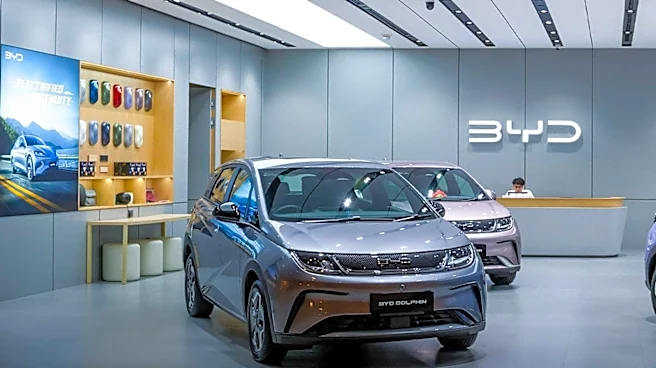
from Ayala Corporation and ACMobility, highlighted the progress of the ACMobility-BYD partnership established in 2023. Discussions focused on opportunities to strengthen the local automotive industry and position the Philippines as a significant market in Southeast Asia's evolving electric mobility landscape. President Marcos Jr. expressed interest in expanding BYD's operations and supporting the domestic EV industry. The partnership has significantly increased the share of electrified vehicles in the Philippine automotive market, growing from approximately 1% in 2024 to nearly one in every four vehicles sold between January and August 2026. BYD, through ACMobility, has expanded its dealership network to 81 outlets and offers 16 battery electric vehicle (BEV) and plug-in hybrid electric vehicle (PHEV) models.
Why It's Important?
This meeting underscores the growing strategic importance of Southeast Asian markets, particularly the Philippines, for global EV manufacturers like BYD. For the U.S., this development highlights the intensifying competition in the global EV market, where Chinese manufacturers are rapidly expanding their international footprint. The increased adoption of EVs in the Philippines could influence regional supply chains and manufacturing capabilities, potentially drawing investments that might otherwise be directed towards other markets. The U.S. automotive industry, while focused on its domestic EV transition, must observe these international expansions as they shape global market dynamics and technological standards. Furthermore, the partnership's focus on building a comprehensive EV ecosystem, including charging infrastructure and aftersales services, sets a precedent for how EV adoption can be accelerated in emerging markets, offering insights for U.S. companies looking to expand globally or for policymakers addressing similar challenges domestically.
What's Next?
The renewed five-year passenger vehicle distribution agreement between Ayala and BYD, signed in January 2026, signals a long-term commitment to growing the New Energy Vehicle (NEV) market in the Philippines. Future discussions will likely explore BYD's broader investment plans across Southeast Asia, including potential regional manufacturing facilities and deeper engagement in the Philippines. This could lead to increased foreign direct investment in the Philippine automotive sector and further integration of the country into the global EV supply chain. For consumers, this means a continued expansion of EV choices and supporting infrastructure. The success of this partnership could serve as a model for other developing nations looking to transition to electric mobility, potentially influencing regional trade agreements and environmental policies. The U.S. will likely monitor these developments for their implications on global trade balances and technological leadership in the automotive sector.
Beyond the Headlines
The collaboration between BYD and ACMobility in the Philippines extends beyond mere vehicle sales; it represents a strategic effort to build a complete electric mobility ecosystem. This includes not only distribution and retail but also significant investments in charging infrastructure and aftersales services. This holistic approach addresses key consumer concerns regarding EV adoption, such as range anxiety and maintenance, which are critical for widespread acceptance in any market, including the U.S. The emphasis on local industry development and the potential for the Philippines to play a larger role in BYD's regional manufacturing strategy also highlight the economic and geopolitical implications of the global EV transition. As countries vie for leadership in this sector, the ability to attract manufacturing and foster local expertise becomes a significant competitive advantage, influencing long-term economic growth and technological independence.