







What's Happening?
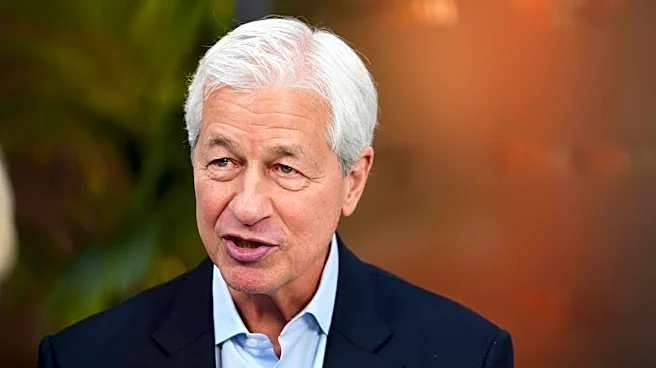
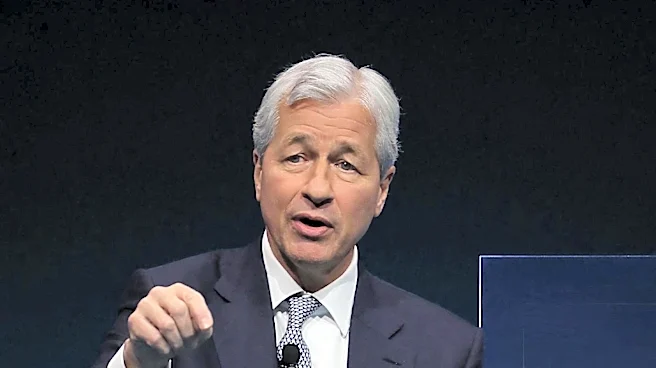
JPMorgan Chase CEO Jamie Dimon stated in a recent interview that he observes a 'mini boom' in small businesses across the United States. Dimon noted that this growth varies by state, attributing the differences to varying rules and regulations. His remarks
come as JPMorgan Chase intensifies its policy efforts in Washington D.C., aligning with a broader initiative announced earlier this year. This initiative involves deploying $80 billion in capital and expanding its small-business banking team by adding 1,000 new bankers. The bank's focus on small businesses underscores their perceived vitality and potential for growth within the current economic landscape. This strategic move by the nation's largest bank highlights a significant commitment to fostering entrepreneurship and supporting the small business sector, which is often considered a crucial indicator of economic health.
Why It's Important?
The reported 'mini boom' in U.S. small businesses, as highlighted by Jamie Dimon, is significant for several reasons. Small businesses are vital drivers of job creation, innovation, and local economic stability. Their growth signals a resilient economy and can lead to increased consumer spending and overall prosperity. JPMorgan Chase's commitment of $80 billion in capital and the addition of 1,000 small-business bankers can substantially impact the accessibility of funding and financial expertise for these enterprises. This support is crucial for small businesses looking to expand, innovate, or navigate economic challenges. The policy push in Washington D.C. also suggests that the banking sector is actively engaging with policymakers to create a more favorable environment for small business growth, potentially influencing future regulations and support programs. This could lead to a more robust and dynamic small business ecosystem, benefiting local communities and the broader national economy.
What's Next?
JPMorgan Chase's ongoing policy push in Washington D.C. and its continued investment in small businesses suggest a sustained effort to capitalize on and further stimulate this 'mini boom.' The bank will likely continue to advocate for policies that support small business growth, potentially influencing legislative discussions on topics such as access to credit, regulatory frameworks, and tax incentives. The deployment of $80 billion in capital and the expansion of its small-business banking team will lead to increased engagement with entrepreneurs across various states. This could result in more tailored financial products and services designed to meet the specific needs of diverse small business sectors. Other financial institutions may also follow suit, increasing their focus on small business lending and support, which could further amplify the positive economic impact. The success of these initiatives will be closely watched as an indicator of the broader economic recovery and the effectiveness of targeted financial support.
Beyond the Headlines
Beyond the immediate economic implications, JPMorgan Chase's focus on small businesses touches upon deeper societal and ethical considerations. Supporting small businesses often translates to strengthening local communities, fostering economic mobility, and promoting a more equitable distribution of wealth. By investing in these enterprises, the bank is not only pursuing commercial interests but also contributing to the social fabric of the nation. The emphasis on varying growth rates by state and the impact of local regulations highlights the complex interplay between national economic trends and localized policy environments. This underscores the need for nuanced approaches to economic development that consider regional specificities. Furthermore, the bank's engagement in policy discussions could set a precedent for how large financial institutions can actively shape economic landscapes beyond traditional banking services, potentially influencing corporate social responsibility standards and the role of finance in community development.