



What's Happening?
Scout Motors, an independent U.S. company backed by Volkswagen Group AG, is making significant progress on its Production Center in Blythewood, South Carolina. The company, which aims to design, engineer, and build electric trucks and rugged SUVs, broke
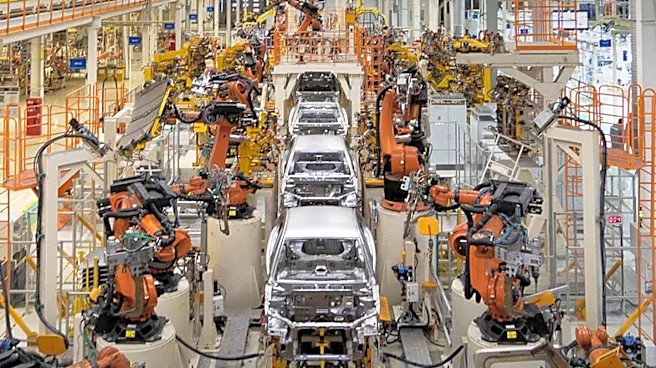
ground on the 1,600-acre site in February 2024. Today, the facility includes a 3 million-square-foot Production Center and over 2 million square feet for a Supplier Park, with a planned capacity of up to 200,000 vehicles annually. Scout Motors has already hired more than 1,800 employees and is currently producing validation vehicles to test equipment, processes, and components. Customer deliveries for its Traveler SUV and Terra truck models are anticipated to begin in 2028. The company has secured approximately 212,000 reservations, with a goal of reaching 400,000 by the time sales commence. Scout Motors CEO Scott Keogh emphasizes the importance of 'validation' at each stage of development, from manufacturing to retail and consumer demand.
Why It's Important?
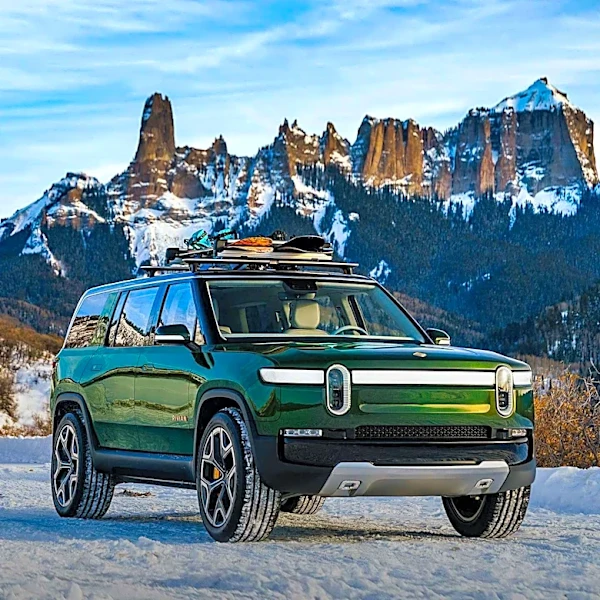
The rapid development of Scout Motors' production facility and its ambitious sales targets signal a significant new player in the U.S. electric vehicle market, particularly in the SUV and truck segments. The substantial investment of over $2 billion in the Production Center, coupled with an additional $300 million in the Supplier Park and $368 million from suppliers, underscores a strong commitment to establishing a robust domestic manufacturing base. This initiative is expected to create over 4,000 permanent jobs at the Production Center, approximately 1,000 on-site supplier jobs, and an additional 4,500 off-site supplier jobs, providing a substantial economic boost to South Carolina. The company's focus on a body-on-frame architecture and a range-extender option for its electric vehicles caters to specific U.S. market demands, potentially challenging established players like Rivian and Ford in the electric off-road segment. The planned starting price of under $60,000 for its models could also make electric SUVs and trucks more accessible to a broader consumer base.
What's Next?
Scout Motors will focus on validating manufacturing at scale, refining its product offerings, and establishing its retail and service model. The company aims to ramp up production to its full capacity of 200,000 vehicles annually, with an initial milestone of 100,000 units to cover fixed production costs. The current 212,000 reservations will need to convert into actual purchases, and the company is targeting 400,000 reservations by the time sales begin. The direct-to-consumer sales strategy, which is currently facing litigation with Volkswagen dealers, will also need to be fully validated. Customer deliveries are scheduled to commence in 2028, starting with the Traveler SUV followed by the Terra pick-up. The success of Scout Motors will depend on its ability to meet production targets, deliver on promised pricing and specifications, and convert strong initial interest into sustained consumer demand and loyalty.
Beyond the Headlines
Scout Motors' emergence highlights several deeper implications for the automotive industry. The company's direct-to-consumer sales model, while aiming for efficiency, challenges traditional dealership franchise systems, potentially setting a precedent for how new automotive brands enter the market. The significant investment by Volkswagen Group AG in an independent U.S. company demonstrates a strategic move to capture a share of the lucrative U.S. large SUV and pick-up market, where Volkswagen has historically had a limited presence. The emphasis on a U.S.-conceived, engineered, and built vehicle carries strategic value, especially in the current tariff environment. Furthermore, the integration of AI-enabled devices in its on-site training center for workforce development signifies a forward-thinking approach to manufacturing and skill acquisition in the evolving automotive landscape, addressing the need for a highly skilled workforce in advanced manufacturing.