






What's Happening?
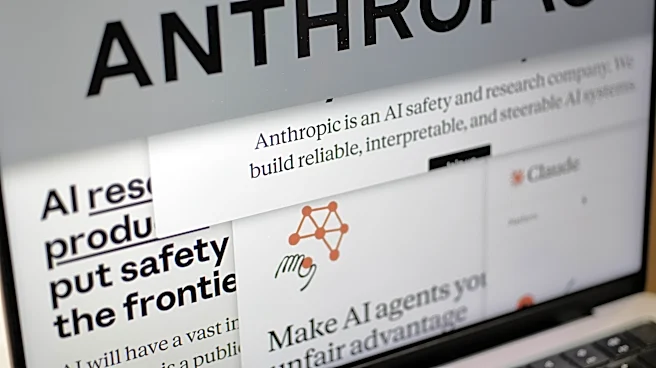
On July 20, 2026, US District Judge Araceli Martínez-Olguín approved a $1.5 billion settlement in a class-action lawsuit against Anthropic, a company accused of using millions of copyrighted books to train its AI model, Claude. The lawsuit, led by authors
Andrea Bartz and Kirk Wallace Johnson, claimed that Anthropic sourced these books from shadow libraries without permission. The settlement, which is the largest copyright settlement in US history, will distribute approximately $3,000 per book across an estimated 500,000 titles. While the ruling penalizes the use of pirated materials, it also establishes that using legally acquired texts for AI training is considered fair use, providing a legal framework for AI companies to follow.
Why It's Important?
This ruling is significant as it sets a precedent for how AI companies can legally use copyrighted materials for training purposes. By distinguishing between pirated and legally acquired texts, the court has provided a clear path for AI companies to use purchased books without ongoing fees or royalties. This decision could lower the cost of compliance for AI firms, making AI training more predictable and potentially accelerating partnerships between AI companies and publishers. However, for authors, the settlement amount per book is relatively low, raising concerns about fair compensation and the potential for AI-generated content to compete with original works without additional royalties.
What's Next?
The ruling may lead to increased collaboration between AI companies and publishers, as the legal risks associated with training data acquisition are reduced. This could create new revenue streams for the publishing industry, although individual author compensation may remain limited. The $3,000 per book settlement could become a benchmark for future cases, influencing the economics of AI training. AI companies are likely to continue purchasing books for training, knowing they can do so without the need for ongoing licensing agreements or revenue sharing with authors.
Beyond the Headlines
The decision highlights the evolving legal landscape surrounding AI and intellectual property rights. It underscores the need for updated copyright laws that address the unique challenges posed by AI technologies. The ruling may also prompt discussions about the ethical implications of using copyrighted materials for AI training and the balance between innovation and protecting creators' rights. As AI continues to advance, similar legal challenges are likely to arise, necessitating further clarification and adaptation of existing laws.