







What's Happening?
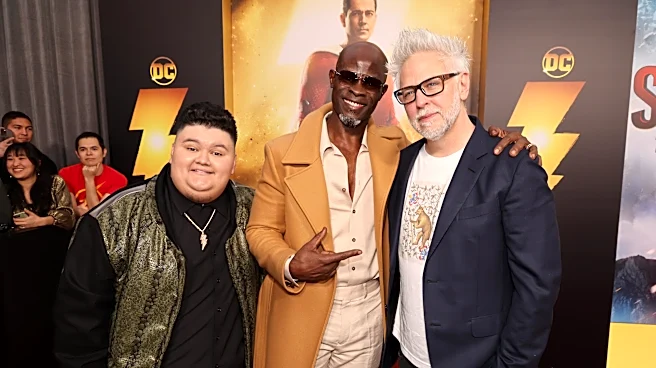
Djimon Hounsou, a two-time Academy Award nominee and actor known for roles in major franchises, has an estimated net worth of $2 million in 2026, according to Celebrity Net Worth. Despite his extensive career, which includes appearances in 'Amistad,'
'Gladiator,' Marvel, DC, and 'Fast & Furious' films, Hounsou has openly discussed his financial struggles. In a January 2025 interview with CNN, he stated he was still finding it difficult to make a living and felt underpaid. Financial documents from a 2026 custody dispute revealed his average gross monthly income was approximately $60,000, while his monthly expenses were around $85,000. These expenses included a $9,700 mortgage, $5,000 for automobile costs, and $2,500 each for groceries, dining out, clothing, and entertainment/vacations. His former partner, Ri’za Marie Simpson, estimated his gross income might be closer to $133,000 per month, highlighting the unpredictable nature of acting income.
Why It's Important?
Hounsou's public statements and financial disclosures shed light on the often-unseen economic realities faced by even critically acclaimed actors in Hollywood. His experience challenges the common perception that success in major film franchises and Oscar nominations automatically translate into substantial and stable wealth. This situation underscores the precarious nature of income in the entertainment industry, where earnings can fluctuate dramatically and high-profile roles do not always guarantee long-term financial security. It also highlights potential disparities in compensation within the industry, as Hounsou has claimed to face discrimination and receive less compensation than some of his peers. This could prompt broader discussions about fair pay, transparency in contracts, and the economic sustainability of acting careers, particularly for actors from diverse backgrounds.
What's Next?
The ongoing custody and financial dispute between Hounsou and Ri’za Marie Simpson is expected to continue, potentially revealing further details about his financial situation and the challenges he faces. The public discourse around his financial struggles may also encourage other actors to speak out about similar experiences, potentially leading to increased advocacy for better compensation structures and more equitable practices within the film industry. As Hounsou continues his acting career, his future roles and financial decisions will be observed, particularly in the context of his stated goal to achieve greater financial stability. His foundation, focused on reconnecting the African diaspora with their heritage, may also gain more attention as his personal story becomes more widely known.
Beyond the Headlines
Hounsou's narrative extends beyond personal finance, touching upon deeper issues within the entertainment industry, such as racial discrimination and the valuation of artistic talent. His journey from homelessness to a two-time Oscar nominee, yet still facing financial precarity, illustrates a systemic challenge where critical acclaim and cultural impact do not always align with economic reward. This situation could spark conversations about the long-term financial planning resources available to actors, the role of agents and managers in securing equitable contracts, and the broader economic model of Hollywood. It also raises ethical questions about how the industry supports its talent, especially those who contribute significantly to its artistic and commercial success but may not reap commensurate financial benefits.