








What's Happening?
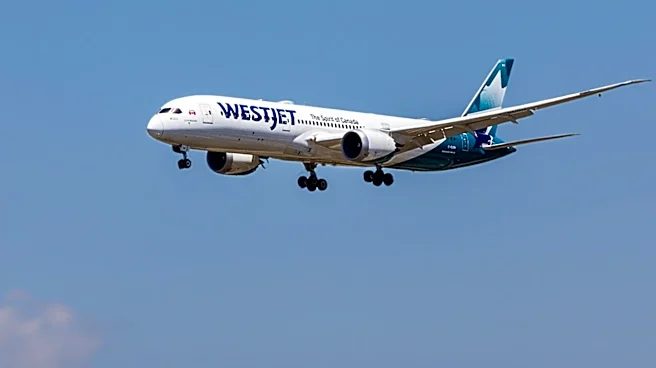
WestJet has canceled hundreds of flights across Canada as its flight attendants, represented by the Canadian Union of Public Employees (CUPE), went on strike. The strike, which began after contract negotiations failed, has left thousands of travelers
stranded during a peak travel period. The primary issue in the dispute is compensation for work done on the ground, which the union argues should be paid. WestJet had offered a proposal including a 13% wage increase and other benefits, but it was not accepted by the union. The strike has caused significant disruption at major airports, with passengers facing delays and cancellations.
Why It's Important?
This strike highlights the critical role of labor relations in the airline industry and the potential for significant disruptions when negotiations break down. The impact on travelers is immediate, with many facing delays and uncertainty about their travel plans. For WestJet, the strike poses a financial challenge and could damage its reputation if the dispute is not resolved quickly. The situation also reflects broader industry trends, where flight attendants are increasingly demanding better compensation for all aspects of their work, not just time spent in the air.
What's Next?
The resolution of this strike will depend on further negotiations between WestJet and CUPE. The Canadian government may choose to intervene if the strike continues to disrupt travel significantly. Passengers affected by the cancellations are encouraged to seek refunds or rebooking options. The outcome of this dispute could influence future labor negotiations in the airline industry, potentially leading to changes in compensation practices for flight attendants across North America.