





What's Happening?
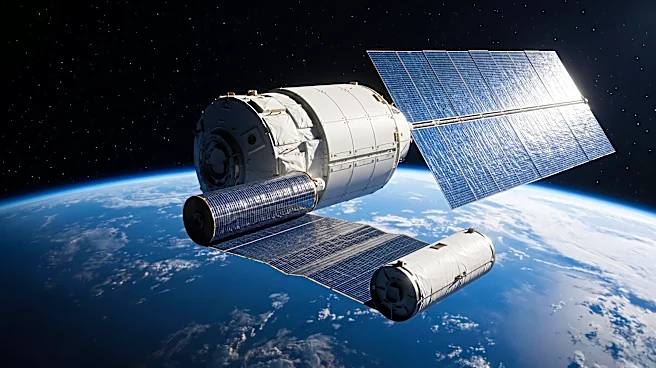
Redwire Corporation has been awarded an additional contract by Axiom Space for the development and delivery of two Roll-Out Solar Array (ROSA) wings. These solar systems are intended to power the second module of the planned Axiom Station. This new order
expands Redwire's existing involvement, as the company is already supplying ROSA wings for the first module of Axiom Station, which is slated for a 2028 launch following assembly, integration, and testing. The second module is currently progressing towards its final assembly. Axiom Space anticipates that the second module will reach orbit less than a year after the first. Once both modules are operational, they are designed to function as a free-flying station capable of supporting a four-person crew. This contract solidifies Redwire's role in providing power systems for multiple phases of Axiom's space station development schedule, further linking its space hardware business to the project's timeline.
Why It's Important?
This contract signifies a crucial step in the development of commercial space infrastructure and highlights the growing reliance on private companies for critical space components. For Redwire, securing this additional contract reinforces its position as a key supplier in the burgeoning commercial space sector, potentially leading to further growth and market share. The development of Axiom Station, powered by Redwire's solar arrays, represents a significant advancement in private space exploration and habitation. It demonstrates the increasing capability of commercial entities to build and operate complex orbital platforms, which could eventually reduce the dependency on government-funded space stations. This collaboration also underscores the economic opportunities within the space industry, creating jobs and fostering technological innovation in areas like power generation for orbital platforms. The success of such ventures could pave the way for more extensive commercial activities in low-Earth orbit and beyond.
What's Next?
The immediate next steps involve Redwire proceeding with the development and delivery of the ROSA wings for Axiom Station's second module. Concurrently, Axiom Space will continue with the final assembly process for this module. The first module is scheduled for launch in 2028, with the second module expected to follow less than a year later. As these modules are deployed and become operational, the focus will shift to their integration and the establishment of a functional, free-flying commercial space station capable of supporting a crew. Further contracts for additional modules or maintenance could be anticipated as Axiom Station expands. The successful deployment and operation of these modules will be critical milestones for both Axiom Space and Redwire, potentially influencing future commercial space station designs and partnerships.
Beyond the Headlines
This development points to a broader trend of privatization and commercialization in space, moving beyond traditional government-led initiatives. The creation of privately owned and operated space stations like Axiom Station could fundamentally alter the landscape of space research, manufacturing, and tourism. It raises questions about the regulatory frameworks needed for commercial space operations, including issues of ownership, liability, and international cooperation in orbit. Furthermore, the reliance on specialized companies like Redwire for critical systems highlights the increasing specialization within the space industry, fostering a complex ecosystem of suppliers and service providers. This shift could also democratize access to space, as private stations may offer more flexible and diverse opportunities for research, development, and even private missions compared to government-controlled platforms.