






What's Happening?
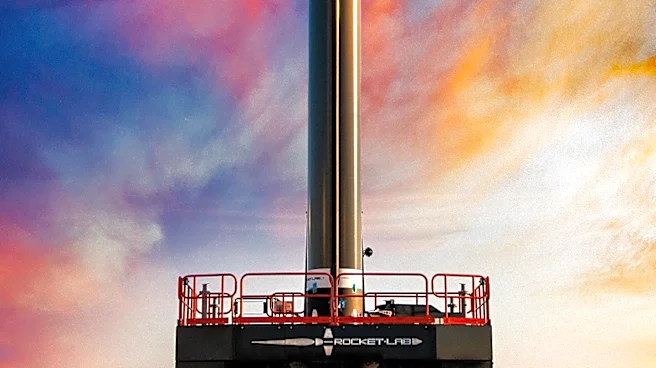
Rocket Lab Corporation (Nasdaq: RKLB) is set to launch its 100th Electron rocket this week, marking a significant milestone in the global space industry. This achievement will establish a new record for a commercially developed launch vehicle reaching
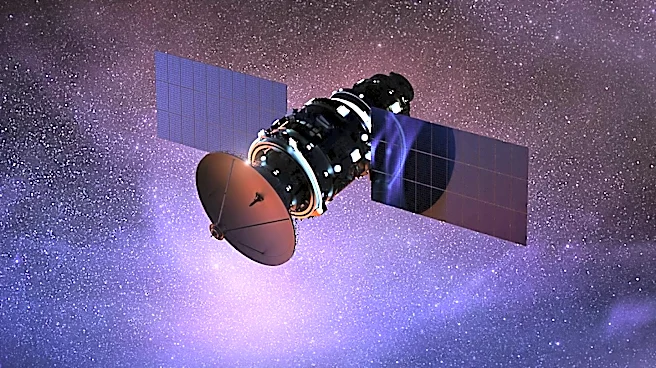
100 launches faster than any other in history. The mission, named 'The Mountain God Rises,' will deploy a single Earth-imaging satellite for the Japanese company Institute for Q-shu Pioneers of Space, Inc. (iQPS) from Rocket Lab Launch Complex 1 in Mahia, New Zealand. Since its inaugural launch in 2017, the Electron rocket has become one of the most frequently launched rockets globally, known for its role in redefining access to space for small satellites. Rocket Lab also operates launch pads in Virginia, USA.
Why It's Important?
The 100th launch of Rocket Lab's Electron rocket underscores the growing maturity and reliability of the commercial small-lift launch sector, which is crucial for the U.S. space industry. This milestone demonstrates the increasing capability of private companies to provide frequent and responsive access to space, reducing reliance on larger, more expensive government-operated launch systems. For U.S. companies and government agencies, this means more flexible and cost-effective options for deploying small satellites, which are vital for applications ranging from Earth observation and telecommunications to national security. Rocket Lab's operational presence in Virginia, USA, further solidifies the U.S.'s domestic launch capabilities and fosters competition and innovation within the aerospace sector, contributing to economic growth and technological advancement.
What's Next?
Following this milestone, Rocket Lab is expected to continue its high-frequency launch schedule with the Electron rocket, further solidifying its position in the small satellite launch market. The company is also developing its reusable Neutron medium-lift rocket, which aims to expand its capabilities to larger payloads and potentially more complex missions. This development will be critical for Rocket Lab's long-term growth and its ability to compete in a broader segment of the launch market. The company will likely continue to leverage its dual-hemisphere launch capabilities, including its U.S. launch site, to offer flexible and responsive launch solutions for a diverse range of commercial, government, and defense customers, further integrating its services into the U.S. space infrastructure.
Beyond the Headlines
Rocket Lab's rapid ascent to 100 Electron launches signifies a broader paradigm shift in space access, moving from a government-dominated enterprise to a more commercialized and agile industry. This trend has profound implications for innovation, as private companies are driven by market forces to develop more efficient and cost-effective technologies. However, it also raises questions about the long-term sustainability of increased launch activity, particularly concerning orbital debris and spectrum management. The proliferation of small satellites, facilitated by services like Electron, could lead to unprecedented data collection and global connectivity, but also presents challenges related to data privacy and potential weaponization of space. Rocket Lab's success is a testament to the entrepreneurial spirit driving the new space economy, shaping the future of how humanity interacts with and utilizes the space environment.