








What's Happening?
Glice AG, a Swiss-engineered synthetic ice manufacturer, addressed the 60th Ordinary International Skating Union (ISU) Congress held in Tenerife from June 10-12, 2026. The company's Co-Founder and CEO, Viktor Meier, presented to 280 delegates, including
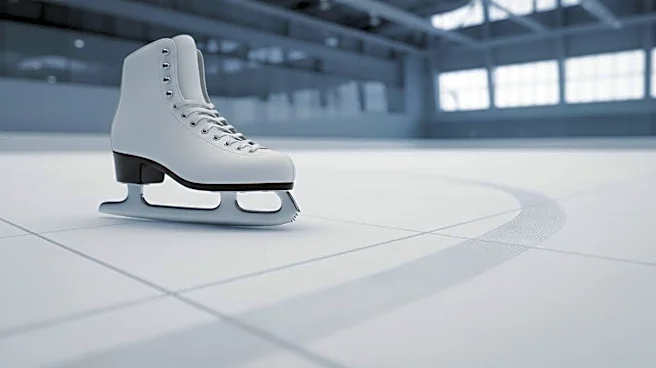
federation representatives, coaches, and athletes. Glice's latest-generation synthetic ice, which has been independently tested by the Fraunhofer Institute, was showcased for its ability to replicate the glide of conventional ice with lower friction. The presentation highlighted the challenges faced by the ice skating community due to rising energy costs and limited access to traditional ice rinks. Glice's synthetic ice offers a solution by enabling year-round training, as demonstrated by case studies from Switzerland and Mexico. ISU President Jae Youl Kim emphasized the potential of such innovations to broaden participation in skating, especially in regions lacking traditional ice facilities.
Why It's Important?
The introduction of synthetic ice by Glice AG at the ISU Congress is significant as it addresses the growing concern over energy costs and accessibility in the ice skating world. By providing a viable alternative to traditional ice, Glice's technology could democratize access to skating, allowing more individuals to participate in the sport regardless of geographic or economic barriers. This innovation could lead to increased participation in skating, fostering talent development in regions previously unable to support ice sports. The ISU's endorsement of such technology underscores its potential to support the sport's growth and sustainability, ensuring that skating remains accessible to future generations.
What's Next?
Following the presentation at the ISU Congress, Glice AG may see increased interest from skating clubs and federations worldwide looking to adopt synthetic ice solutions. The ISU's support could lead to further collaborations and the integration of synthetic ice in training programs, especially in regions with limited access to traditional ice. As more organizations explore this technology, there could be a shift in how skating is taught and practiced globally, potentially leading to new competitive opportunities and events on synthetic surfaces.