


What's Happening?
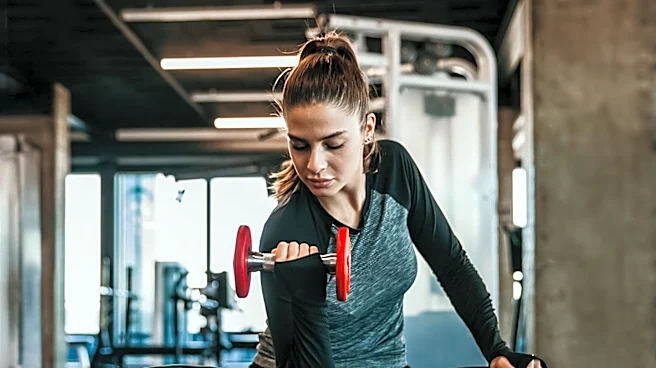
Strength training is experiencing a surge in popularity among women, moving away from the historical emphasis on cardio and thinness. This shift is driven by increased awareness of the health benefits of building muscle, particularly for middle-aged women, including
improved bone density and overall well-being. Liz Bucar, a professor of religion at Northeastern University, noted a change in fitness advice, where previous recommendations for extensive cardio without adequate nutritional support are now seen as detrimental to bone health. Fitness journalist Mikala Jamison, author of 'The Forever Project,' views strength training as a positive way for women to redefine their relationship with physical activity, moving beyond toxic diet culture. However, Jamison also expresses concern that this trend might be creating another 'very aspirational body standard,' where 'strong is the new skinny' could still lead to unrealistic appearance expectations. Keri Harvey, a certified personal trainer, highlights the underrepresentation of larger women who lift weights in media, emphasizing that strength comes in various body types.
Why It's Important?
The growing embrace of strength training among women in the U.S. signifies a notable cultural shift in fitness ideals, moving from a focus on thinness to one on physical capability. This change has significant implications for public health, potentially leading to improved bone density and overall well-being for a broader demographic, especially as women age. However, this trend also carries the risk of perpetuating new, potentially harmful body image standards, as highlighted by registered dietitian Megan Hellner. The emphasis on an 'athletic aesthetic' could lead to disordered eating and exercise patterns if not approached with caution and a focus on internal motivation rather than external appearance. The need for adequate rest and proper nutrition, which is crucial for muscle building, contrasts sharply with previous diet-focused fitness trends, potentially fostering healthier eating habits by requiring sufficient caloric intake. This evolution in fitness culture could empower women to prioritize health and strength, but it also necessitates a critical examination of how these new ideals are presented and perceived to avoid replacing one narrow body ideal with another.
What's Next?
As strength training continues to gain traction, the fitness industry and media will likely face increasing pressure to promote more inclusive and realistic representations of strength and body types. Fitness professionals like Keri Harvey advocate for sustainable approaches to fitness that extend beyond fleeting trends and appearance-driven goals. There will be a continued need for education on the importance of adequate rest and proper nutrition in strength training to prevent injuries and disordered exercise patterns. Organizations and healthcare providers may need to address the potential for new forms of body image issues and eating disorders that could arise from the 'strong is the new skinny' mentality. The long-term impact will depend on whether the focus remains on genuine health and functional strength or if it devolves into another aspirational aesthetic, potentially influencing how fitness programs are designed, marketed, and consumed by women across the U.S.
Beyond the Headlines
The shift towards strength training for women delves deeper than just physical fitness; it touches upon societal perceptions of female empowerment and body autonomy. Historically, women's fitness was often linked to achieving a specific aesthetic, primarily thinness. The current trend, while promoting strength, risks creating a new 'aspirational body standard' that, despite its positive framing, can still lead to unhealthy fixations. This raises ethical questions about the commercialization of fitness and the constant pressure on women to conform to evolving ideals. The emphasis on 'taking up space' through strength training challenges traditional notions of femininity, yet the media's portrayal often still favors women who are 'objectively small, just with some additional obvious musculature.' This highlights a persistent cultural struggle to fully embrace diverse body types within the realm of health and fitness, suggesting that while the methods of achieving an ideal body may change, the underlying pressure to conform to an ideal remains. The conversation needs to move beyond appearance to truly celebrate the functional benefits and personal well-being derived from strength.