

What's Happening?
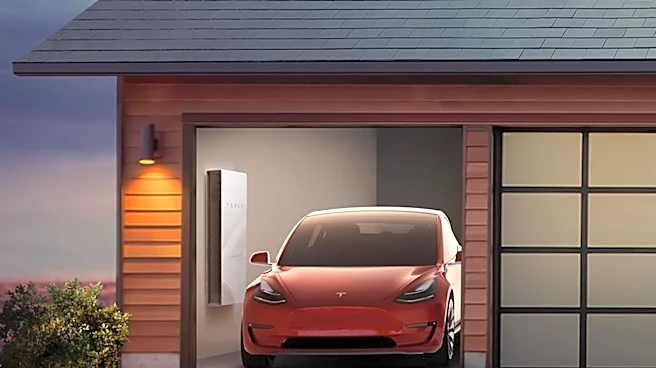
Tesla has officially discontinued its solar roof product, a system designed to integrate solar power generation into roof shingles. Public-facing mentions of the solar roof have been removed from Tesla's website, with its URL now redirecting to the company's
generic solar landing page. All support pages for the solar roof have also been redirected. This move, initially reported by Electrek and confirmed by TechCrunch, marks the end of a product that Tesla introduced nearly a decade ago with the vision of creating a mini-power plant disguised as high-end roofing materials. Despite initial ambitious goals of 1,000 installations per week, the project only achieved between 20 and 40 installations weekly by 2022. The solar roof was consistently positioned as a luxury item, with reported installation costs reaching up to $200,000, making it significantly more expensive than traditional solar panel installations even when factoring in roof replacement.
Why It's Important?
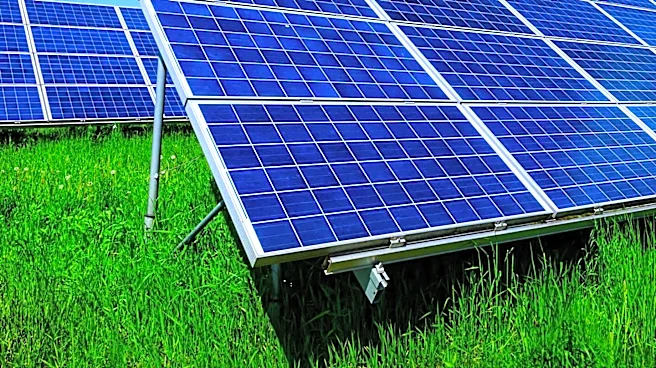
The discontinuation of Tesla's solar roof product has significant implications for the U.S. renewable energy market and consumer perceptions of integrated solar technology. Tesla's entry into the solar roof market brought considerable attention and innovation to the sector, and its withdrawal could be seen as a setback for the concept of aesthetically integrated solar solutions. While other companies like GAF and Merlin Solar continue to offer similar products, Tesla's decision, given its market influence and resources, might lead to skepticism about the viability of solar roofs on a larger scale. The challenges faced by Tesla, including high manufacturing costs due to unique tile designs and performance issues related to heat, highlight the technical and economic hurdles in developing and scaling such advanced solar products. This shift could reinforce the dominance of traditional solar panels, which benefit from standardized production and lower costs, in the residential solar market.
What's Next?
While Tesla is no longer actively marketing or selling its solar roof, some existing inventory may still be available through third-party installers. Two solar installers indicated to TechCrunch that they are still offering the product, with availability dependent on project timelines. This suggests a potential period of clearing out remaining stock rather than an immediate cessation of all installations. Tesla will now focus its efforts on promoting its traditional solar panels, directing customers interested in solar energy towards these more established and cost-effective solutions. The future of integrated solar roofs will likely depend on the success of other companies in overcoming the manufacturing and performance challenges that Tesla encountered, and in developing more affordable and efficient alternatives to capture market share.
Beyond the Headlines
The failure of Tesla's solar roof project underscores the complex interplay between innovation, market demand, and economic realities in the renewable energy sector. Despite the appeal of a seamless, aesthetically pleasing solar solution, the practicalities of manufacturing unique components, managing high installation costs, and addressing performance issues like heat-induced underproduction proved to be significant obstacles. This situation highlights a broader challenge in the green technology space: balancing cutting-edge design and integration with cost-effectiveness and scalability. The experience with the solar roof could lead to a re-evaluation of product development strategies within the industry, potentially favoring more modular and standardized approaches that can achieve wider adoption and lower costs, even if they are less visually integrated. It also raises questions about the long-term sustainability of luxury-priced green technologies in a market increasingly driven by affordability and efficiency.