



What's Happening?
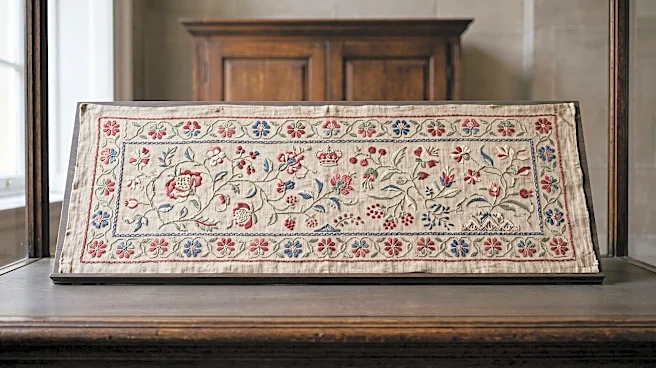
The American Folk Art Museum in New York City is hosting an exhibition titled 'Locating Girlhood: Place and Identity in Early American "Schoolgirl" Art.' This exhibition, part of America’s 250th-anniversary celebration, showcases nearly 100 works of needlework,
samplers, paintings, maps, and other decorative arts created by girls and young women in the eighteenth and nineteenth centuries. Many of these pieces are too fragile for frequent display, making this exhibition a rare opportunity to view them. The collection includes significant historical embroideries, such as Mary King’s 'Tree of Life' and the 'Fishing Lady' scene from Boston, and also features works by Black and Native American makers, expanding the traditional narrative of American art. The museum is also offering free programs, including embroidery workshops, curator talks, family activities, and a symposium on sampler-making and 'schoolgirl' art.
Why It's Important?
This exhibition is important because it recontextualizes the artistic contributions of young women in early America, moving beyond viewing their work as mere school exercises. By highlighting their thoughtful expressions of identity and belonging through art, it enriches the understanding of early American visual culture. The inclusion of works by Black and Native American makers is particularly significant, as it broadens the historical narrative and ensures a more inclusive representation of American art. This initiative helps to correct historical oversights where the artistic achievements of these groups were often marginalized or overlooked. Furthermore, the accompanying educational programs provide opportunities for public engagement and deeper appreciation of these historical art forms, fostering a connection between contemporary audiences and the artistic heritage of early American women.
What's Next?
The 'Locating Girlhood' exhibition will be on view through February 28, 2027. Throughout its run, the American Folk Art Museum will continue to offer a variety of free public programs. These include embroidery workshops, which allow visitors to engage directly with the techniques used by the artists, as well as curator talks that provide deeper insights into the collection and its historical context. Family activities are also planned to engage younger audiences, and a symposium will delve into the history and meaning of sampler-making and 'schoolgirl' art. An illustrated companion book about the exhibition is also available, offering fresh perspectives on this collection of significant needlework. These ongoing initiatives aim to maximize public engagement and educational outreach related to the exhibition.
Beyond the Headlines
The exhibition delves into the deeper cultural and social implications of 'schoolgirl' art, revealing how these pieces were not just decorative but served as significant expressions of identity and belonging for young women in early America. It challenges the traditional art historical canon by emphasizing the often-overlooked contributions of women and marginalized communities to the visual culture of the nation. By showcasing works that depict pastoral landscapes, gardens, city views, and maps, the exhibition explores how girls used art to represent their sense of place and their understanding of the world around them. This perspective highlights the role of art as a tool for self-expression and social commentary, even within the confines of historical gender roles, and underscores the importance of preserving and re-evaluating such historical artifacts.