







What's Happening?
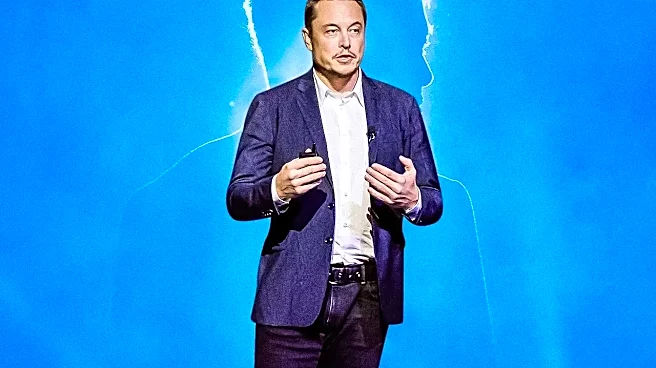
Joe Tsai, co-founder and chairman of Alibaba Group, has urged Europe to embrace open-source artificial intelligence (AI) and develop its own computing infrastructure to achieve technological independence from the United States and China. Speaking at the Wave
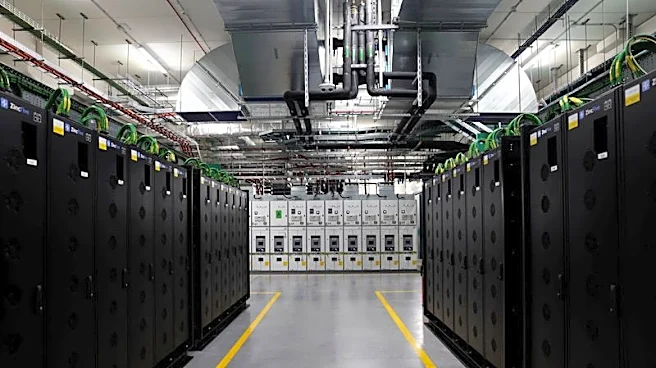
by Vento conference in Turin, Italy, Tsai emphasized that no country should fully rely on another nation's technology, citing potential risks from changes in government or circumstances that could lead to technology being shut off. He highlighted the importance of building data center capacity within Europe to train and run AI models, suggesting that Europe is not fully utilizing its AI research talent, which is often recruited by U.S. and Chinese labs. Tsai also pointed to Europe's industrial base as an untapped advantage, where proprietary manufacturing data could be used to train AI models, providing a competitive edge for European firms. He contrasted the open-source approach favored by Chinese AI labs, which publish research and release models to drive global adoption, with the closed-source practices of some U.S. firms like OpenAI and Anthropic.
Why It's Important?
Tsai's comments underscore a growing global concern about technological sovereignty, particularly in the rapidly evolving field of AI. For the U.S., this perspective from a prominent Chinese tech leader highlights the competitive landscape and the strategic importance of AI development. If Europe successfully builds its own independent AI infrastructure and fosters an open-source ecosystem, it could reduce its reliance on U.S. and Chinese tech giants, potentially altering global power dynamics in the technology sector. This shift could impact U.S. companies that currently dominate the cloud computing and AI markets, such as Amazon Web Services, Microsoft Azure, and Google Cloud, which collectively hold a significant share of the E.U. cloud market. A more independent European AI sector could lead to increased competition, potentially influencing U.S. tech companies to adapt their strategies, including their approach to open-source initiatives and international collaborations. Furthermore, the emphasis on industrial data for AI training in Europe could create new avenues for innovation and economic growth, potentially challenging the U.S.'s lead in certain AI applications.
What's Next?
Following Tsai's recommendations, Europe may intensify its efforts to develop indigenous AI capabilities and infrastructure. This could involve increased investment in data centers, specialized cloud-computing firms (neoclouds), and initiatives to retain and cultivate AI talent within the region. European policymakers, who have already shown interest in reducing dependence on U.S. technology through legislative proposals like the Cloud and AI Development Act, might find further impetus to implement policies that favor European-based AI solutions. This could lead to stricter regulations or incentives for companies to host data and train AI models within E.U. jurisdiction. U.S. tech companies operating in Europe may face increased pressure to localize their operations, comply with evolving data sovereignty requirements, or engage more actively with European open-source AI initiatives. The ongoing debate between open-source and closed-source AI models will likely continue, with potential implications for research collaboration, intellectual property, and market access in the global AI landscape.
Beyond the Headlines
The call for European technological independence in AI extends beyond mere economic competition; it touches upon fundamental issues of national security, data privacy, and geopolitical influence. The ability for a nation or bloc to control its own AI infrastructure and development means greater autonomy in critical decision-making, reduced vulnerability to external pressures, and enhanced capacity to protect sensitive data. This push for AI sovereignty could lead to a fragmentation of the global AI ecosystem, with different regions developing distinct technological stacks and regulatory frameworks. Such a scenario might necessitate new forms of international cooperation and standardization to ensure interoperability and prevent a 'digital iron curtain.' Moreover, the emphasis on open-source AI raises ethical considerations regarding transparency, accountability, and the potential for misuse, which will require careful governance. The long-term implications could include a redefinition of global technological leadership, with a more multipolar landscape where Europe emerges as a significant independent player in AI, alongside the U.S. and China.