


What's Happening?
Paul Lafrance, founder and lead designer of Paul Lafrance Design, emphasizes integrating design psychology into outdoor living spaces, moving beyond traditional 'deck designer' roles. Lafrance, known for his HGTV shows like 'Decked Out,' has worked in design since
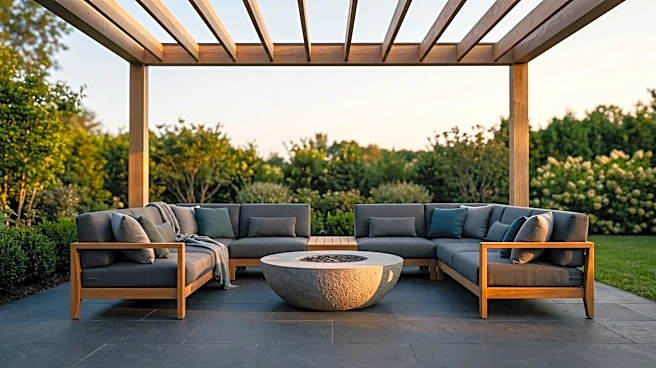
1997, encompassing backyard retreats, commercial outdoor spaces, custom homes, and interior transformations. He challenges the conventional separation between indoor and outdoor design, applying interior design principles such as flooring, ceilings, lighting, furniture, texture, scale, and circulation to exterior environments. Lafrance believes that outdoor spaces should evoke specific feelings and provide a sense of escape and intimacy, regardless of their size. He prioritizes investing in elements that enhance the user's experience, such as overhead structures to define space and thoughtful lighting to create atmosphere, rather than focusing solely on square footage or fleeting trends. His approach involves understanding clients' deeper aspirations and memories to create timeless designs.
Why It's Important?
Lafrance's philosophy is significant because it redefines the value proposition of outdoor living spaces, shifting it from mere aesthetic enhancement to an investment in well-being and emotional recovery. In an increasingly fast-paced and demanding society, the ability of a designed space to offer respite and connection becomes crucial. By applying design psychology, Lafrance highlights that even small outdoor areas can provide a profound sense of escape if tailored to the individual's needs. This approach challenges the industry to consider the emotional and psychological impact of design, potentially leading to more meaningful and user-centric outdoor environments. It also encourages a more holistic view of home design, blurring the lines between interior and exterior to create seamless living experiences. This could influence how homeowners, designers, and developers approach property development, prioritizing human experience over superficial trends or size.
What's Next?
The continued emphasis on design psychology by figures like Paul Lafrance suggests a growing trend towards more intentional and emotionally resonant outdoor living spaces. This approach could lead to increased demand for designers who specialize in understanding client psychology and translating it into physical environments. The industry may see a shift away from purely functional or trend-driven designs towards those that prioritize long-term well-being and personal connection. Educational programs for designers might incorporate more psychological principles, and clients may become more discerning, seeking spaces that genuinely reflect their dreams and memories. This could also foster greater collaboration between landscape architects, interior designers, and even psychologists to create truly integrated and impactful living environments.
Beyond the Headlines
Lafrance's work touches upon deeper ethical and cultural implications regarding our relationship with space and well-being. By asking clients about their dreams and memories, he elevates design beyond a transactional service to a process of co-creation that honors personal history and aspirations. This approach implicitly critiques a consumerist culture that often prioritizes newness and trends over enduring value and personal significance. It suggests that true luxury in design lies not in opulence but in the ability of a space to foster emotional comfort, connection, and a sense of belonging. This could lead to a broader cultural appreciation for thoughtful, human-centered design, encouraging individuals to invest in spaces that nurture their inner lives rather than merely impress others.