



What's Happening?
Hugging Face has released `cosmos_nano_policy_so101`, a 6-degrees-of-freedom (DOF) action policy designed for bin-placement tasks. This policy was post-trained from `nvidia/Cosmos3-Nano` on an RTX PRO 6000 GPU and represents checkpoint iteration 3750
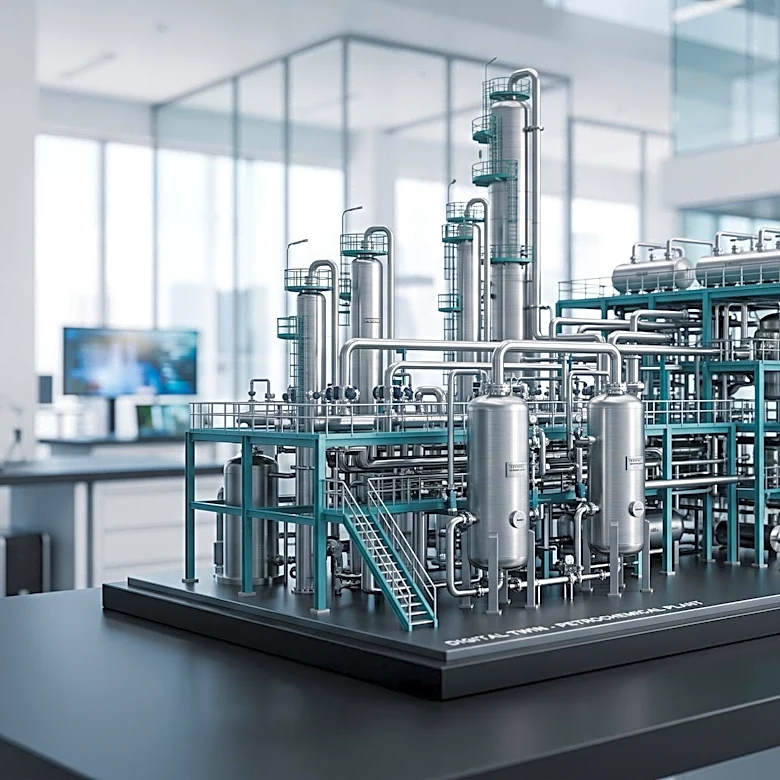
of its development run. The LoRA adapters are merged into the base weights, and the checkpoint is exported as consolidated safetensors. The policy was trained using data from `so101_bench_sim_6`, specifically restricted to five single-object instructions (e.g., 'green shoes', 'cardboard box') for placing objects in a plastic bin. Evaluation in the `so101_bench` Isaac Lab digital twin, `So101Bench-Bin-v0`, showed a low success rate of 3.1% across all runs. Notably, all successful placements occurred when the object was on the same side of the table as the bin, indicating that the far-side placement task remains unsolved. The policy is served via an openpi websocket server using `cosmos_framework.scripts.action_policy_server_robolab`.
Why It's Important?
The release of `cosmos_nano_policy_so101` by Hugging Face is a step in the ongoing development of robotic manipulation capabilities, with implications for U.S. industries such as manufacturing, logistics, and automation. While the current success rate is low and limited to specific scenarios, this research contributes to the foundational understanding of how AI policies can control complex robotic actions. Improving robotic dexterity and task completion, even in simulated environments, is crucial for advancing automation in warehouses, factories, and service industries. The ability to train robots for precise object manipulation, such as bin-placement, can lead to increased efficiency, reduced labor costs, and enhanced safety in hazardous environments. The open-source nature of this release encourages further research and development within the robotics community, potentially accelerating the creation of more robust and versatile robotic systems that can handle a wider array of tasks in real-world settings.
What's Next?
Future development for `cosmos_nano_policy_so101` and similar robotic policies will likely focus on significantly improving success rates and expanding the range of tasks and environments they can handle. Key areas of research will include enhancing the policy's ability to generalize to new objects and cluttered scenes, as well as improving its performance in more complex spatial arrangements, such as placing objects from the far side of a table. Further optimization of training methodologies, potentially incorporating more diverse data and advanced reinforcement learning techniques, will be critical. The transition from simulation to real-world physical robots will also be a major challenge, requiring robust sim-to-real transfer techniques. Collaboration between AI researchers and robotics engineers will be essential to bridge the gap between theoretical advancements and practical applications, ultimately leading to more capable and autonomous robotic systems in various industrial settings.
Beyond the Headlines
The development of robotic policies like `cosmos_nano_policy_so101` touches upon broader societal and ethical considerations regarding the future of automation. As robots become more adept at complex physical tasks, questions arise about their impact on the workforce, the need for reskilling initiatives, and the potential for job displacement. The ethical implications of autonomous systems, particularly in decision-making processes and safety protocols, will become increasingly important. Furthermore, the integration of AI-powered robots into daily life raises philosophical questions about human-robot interaction and the definition of intelligence. While the immediate application is industrial, the underlying technology could eventually lead to more sophisticated personal robots, impacting caregiving, domestic tasks, and even companionship. Ensuring responsible development and deployment, with a focus on human well-being and societal benefit, will be paramount as these technologies advance.