






What's Happening?
Rocket Lab USA has experienced a significant decline in investor sentiment, with its shares falling 63.75% from a May high of $151 to $54.73 by October 30. This collapse comes despite the company's growing backlog and expanding space infrastructure business.
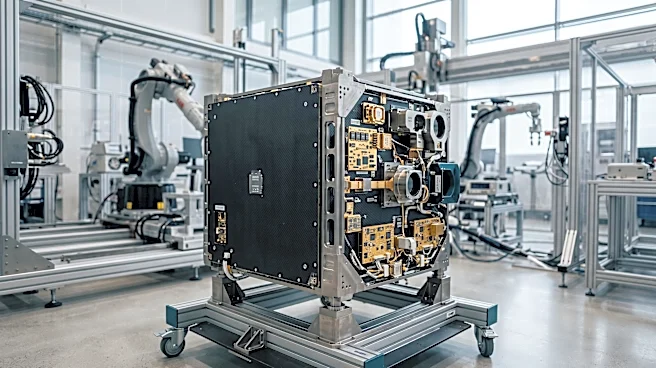
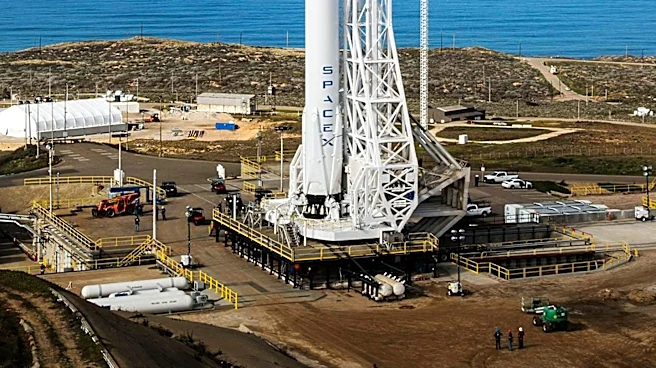
Rocket Lab's revenue from its Space Systems division, which manufactures satellites and components, now significantly outweighs its launch services revenue. The company's strategy involves becoming an integrated provider of space infrastructure, encompassing manufacturing, launch, and potentially satellite communications operations through its proposed acquisition of Iridium Communications. However, the delay of its reusable medium-lift rocket, Neutron, into 2027 has introduced uncertainty. This delay postpones Neutron's contribution to the integrated business model, increasing the importance of Rocket Lab's existing revenue and financial resources as development spending continues without immediate revenue generation from the larger rocket. The company's second-quarter financial results showed a 62% year-over-year revenue increase to $234.1 million and a 137% increase in backlog to $2.36 billion, but it continues to report operating losses.
Why It's Important?
The substantial drop in Rocket Lab's stock price highlights investor concerns regarding the valuation and execution risks associated with its ambitious integrated space infrastructure strategy. While the company's growth in backlog and its Space Systems revenue demonstrate strong operational momentum and customer demand, the delay of a key product like Neutron can significantly impact investor confidence and financial projections. This situation underscores the capital-intensive nature of the space industry and the challenges of balancing rapid expansion with profitability. The proposed acquisition of Iridium Communications, while strategically sound for diversifying revenue streams into recurring services, also introduces financial complexities, including a recent equity issuance that diluted existing shareholders. The market's reaction indicates that investors are scrutinizing not just growth, but also the path to sustainable profitability and the efficient use of capital. The ability of Rocket Lab to demonstrate that its diverse businesses can reinforce each other economically, rather than merely participating in more segments, will be critical for its future valuation.
What's Next?
Rocket Lab is scheduled to report its third-quarter results on November 9, which will be a critical test for investor confidence. Management has guided revenue to a range of $250 million to $265 million, suggesting another quarterly revenue record. Investors will be closely watching for signs of improving operating leverage, updates on Neutron's development schedule and associated spending, and details on the integration and financing of the Iridium acquisition. The company will need to demonstrate how its growing revenue translates into sustainable profitability and free cash flow. The market's reaction will depend on whether management can effectively communicate how the company's different businesses economically reinforce one another, proving that the integrated infrastructure strategy can lead to higher returns. Further schedule deterioration or rising capital requirements could make it more challenging for Rocket Lab to defend its current valuation, despite its expanding position in the space infrastructure market.
Beyond the Headlines
Rocket Lab's situation reflects a broader trend in the 'New Space' economy, where companies are moving beyond single-service offerings to build comprehensive space infrastructure. This strategy aims to capture more value across the entire space value chain, from manufacturing and launch to in-orbit operations and data services. However, it also exposes companies to greater financial risks and operational complexities. The stock's decline, despite strong operational growth, suggests that the market is becoming more discerning about the long-term viability and profitability of these integrated models. It highlights the tension between ambitious technological development and the need for immediate financial returns. The success of companies like Rocket Lab will depend not only on their engineering prowess but also on their ability to effectively manage capital, integrate diverse business units, and demonstrate a clear path to profitability in a highly competitive and evolving industry. This case could serve as a bellwether for other 'New Space' companies pursuing similar integrated strategies.