



What's Happening?
Muscle & Fitness has addressed the long-standing myth of isolating 'upper' and 'lower' abdominal muscles, clarifying that the rectus abdominis is a single, paired muscle. While it may appear as separate blocks, it functions as a unit. Gareth Sapstead,
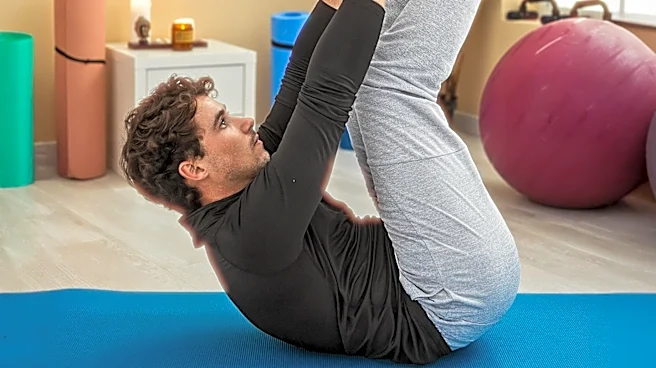
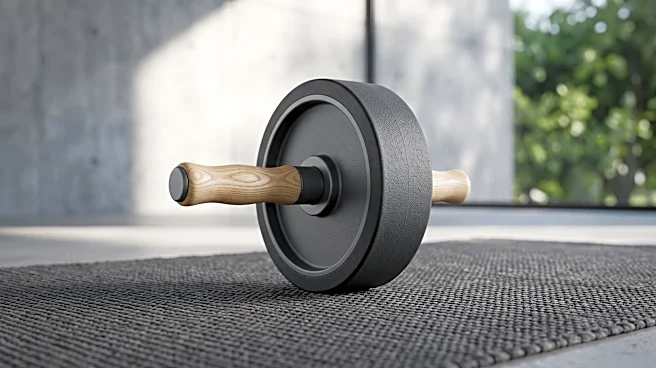
author of 'Ultimate Abs,' explains that while complete isolation is not possible, different exercises can 'bias' or emphasize certain regions of the rectus abdominis. The key distinction lies in whether the movement involves bringing the rib cage towards the pelvis (trunk flexion) or the pelvis towards the rib cage (pelvic stability), particularly through posterior pelvic tilt. The article emphasizes that the rectus abdominis also plays crucial roles in resisting excessive spinal extension, rotation, and lateral flexion. Therefore, a well-rounded core program should train all these functions rather than focusing on isolating non-existent 'upper' or 'lower' sections. Exercises like ab-wheel rollouts, Pallof presses, and suitcase carries are recommended for their anti-extension, anti-rotation, and anti-lateral flexion benefits, respectively.
Why It's Important?
This clarification is important for promoting effective and safe core training practices. Misconceptions about isolating 'upper' and 'lower' abs often lead to inefficient workouts, over-reliance on hip flexors, and neglect of the core's other vital functions, such as resisting unwanted movement. By understanding that the rectus abdominis works as a unit, individuals can adopt a more functional approach to core training, which is crucial for overall strength, injury prevention, and athletic performance. The article also debunks the spot-reduction myth, emphasizing that training abs builds muscle but does not directly burn fat from the abdominal area. This insight helps individuals set realistic fitness goals and avoid ineffective training decisions, ultimately leading to better results and a more comprehensive understanding of core physiology.
What's Next?
The article encourages individuals to shift their focus from 'upper' and 'lower' ab workouts to training the core's various functions. This means incorporating a diverse range of exercises that address trunk flexion, pelvic stability, anti-extension, anti-rotation, and anti-lateral flexion. Progressive overload, through increased resistance, reps, range of motion, or lever length, is highlighted as essential for muscle development, just like any other muscle group. Fitness professionals and enthusiasts are advised to prioritize proper form and control over simply moving legs or adding excessive weight. This guidance will likely lead to more balanced and effective core training programs, moving away from outdated practices and towards a more scientifically informed approach.
Beyond the Headlines
The debunking of the 'upper vs. lower abs' myth reflects a broader evolution in fitness science, where a deeper understanding of anatomy and biomechanics is replacing anecdotal training practices. This shift has ethical implications, as it encourages trainers and individuals to rely on evidence-based information rather than misleading claims, preventing wasted effort and potential injury. Culturally, it challenges the pervasive influence of fitness myths often perpetuated by marketing and social media, promoting a more critical and informed approach to exercise. The emphasis on functional training also aligns with a growing societal value placed on holistic health and movement quality, rather than just superficial aesthetics. This encourages individuals to view their core not just as a 'six-pack' but as the central pillar of their body's stability and movement capabilities.