






What's Happening?
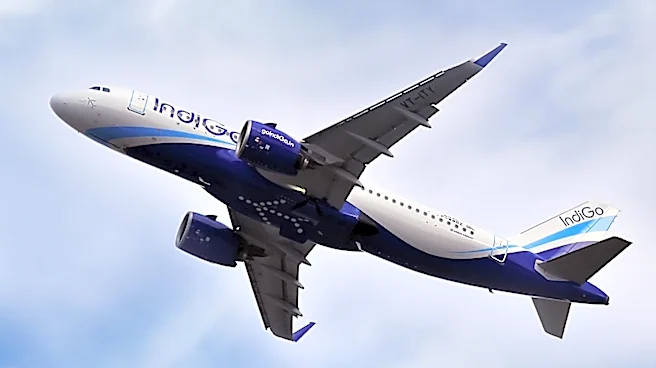
IndiGo, India's largest airline, is evaluating the implementation of fuel hedging as it prepares to launch long-haul international flights. According to IndiGo CEO Willie Walsh, discussions have taken place with the airline's board to conduct a comprehensive
review of this financial risk management strategy. Fuel hedging aims to protect airlines from significant increases in fuel prices by using derivatives to buy or sell the expected future price of oil. This consideration comes as IndiGo plans to receive its first Airbus A350 in the second quarter of 2028, which will facilitate the expansion of its long-haul international network. The airline previously operated long-haul services using damp-leased Boeing 787-9 aircraft but has since ceased those operations. IndiGo reported a consolidated net loss of 1,879 crore in the September quarter, with fuel expenses surging by 67% year-over-year, partly due to the West Asia crisis.
Why It's Important?
The potential adoption of fuel hedging by IndiGo marks a significant strategic shift for the airline, which has historically avoided such practices. This move is crucial for its long-haul expansion, as many international competitors already utilize hedging to manage fuel cost volatility. By hedging, IndiGo could stabilize its operational costs, making its long-haul routes more financially predictable and competitive. This could impact the broader aviation market by influencing pricing strategies and potentially increasing competition on international routes. For U.S. travelers, this could mean more competitive fares and expanded route options to and from India, as IndiGo aims to build a robust long-haul network. The decision to hedge could also set a precedent for other unhedged domestic rivals, potentially leading to a broader adoption of risk management strategies within the Indian aviation sector.
What's Next?
IndiGo's leadership will undertake a comprehensive review of fuel hedging policies, particularly in the context of its long-haul expansion. The airline expects to receive its first Airbus A350 in the second quarter of 2028, which will be configured with a three-class cabin, including 16 flat beds in business class, premium economy, and economy seats. This configuration is locked for the first 10 planes, with potential for more business-class flat beds in subsequent aircraft. IndiGo plans to use these A350s to build its long-haul network, complementing its existing A321 XLR operations. The airline will continue operating A321 XLR services to Amsterdam until the A350s come online to preserve valuable slots. The outcome of the fuel hedging review will determine IndiGo's approach to managing fuel price risks as it ventures further into the international market.
Beyond the Headlines
IndiGo's move towards fuel hedging and long-haul expansion signifies a broader trend in the global aviation industry where airlines are increasingly seeking to diversify their revenue streams and mitigate financial risks. The introduction of a three-class cabin configuration on its A350s indicates a strategic shift from a purely low-cost carrier model to one that caters to premium travelers on international routes. This evolution could redefine IndiGo's market positioning and challenge established full-service carriers. The decision to hedge, while a risk management tool, also reflects the volatile geopolitical landscape and its direct impact on global oil prices, underscoring the interconnectedness of international events and corporate financial strategies. This could lead to a more resilient and adaptable Indian aviation sector, capable of competing more effectively on the global stage.