







What's Happening?
Taiwan Semiconductor Manufacturing Company (TSMC) is reportedly surveying its equipment suppliers about the feasibility of replacing rare-earth-dependent motors in its factory automation systems. This initiative comes in response to China's 2025 export
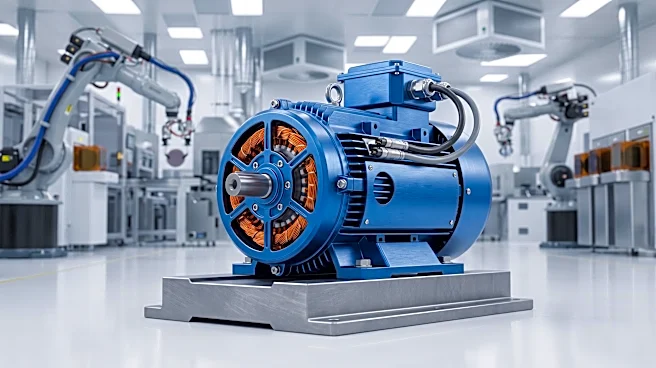
controls on selected rare-earth materials, magnets, and related technologies, which require licenses for certain international shipments. Rare-earth magnets are crucial for industrial motors that demand precise movement, efficiency, and compact designs, essential characteristics for the automated machinery used in semiconductor factories to move silicon wafers and other components. While TSMC is not currently experiencing a shortage or impact on its manufacturing output, the discussions reflect a proactive effort to mitigate potential vulnerabilities in its supply chain. TSMC is a critical manufacturer of advanced processors for major technology companies like Nvidia and AMD, making its production capacity vital to the artificial intelligence industry.
Why It's Important?
This development is highly significant for the U.S. technology sector and its national security. The U.S. relies heavily on TSMC for advanced AI chips, and any disruption to TSMC's production due to supply chain vulnerabilities, particularly those stemming from geopolitical tensions, could have severe repercussions. China's dominance in rare-earth production and its use of export controls highlight a critical dependency for global technology manufacturing. TSMC's move to explore rare-earth-free alternatives aims to reduce this reliance, thereby enhancing the resilience of the AI chip supply chain. This could lead to increased investment in research and development for alternative materials and manufacturing processes within the U.S. and its allies. For U.S. companies like Nvidia and AMD, securing a stable and diversified supply chain for AI chip manufacturing equipment is paramount to sustaining innovation and growth in the rapidly expanding artificial intelligence market. The situation underscores the broader geopolitical competition for technological supremacy and the strategic importance of critical minerals.
What's Next?
TSMC's efforts to find rare-earth-free alternatives are still preliminary, and the company has not yet implemented such technology across its manufacturing network. The transition to new motor systems would require extensive testing and potential modifications to existing manufacturing equipment to ensure they meet the demanding performance and reliability standards of semiconductor factories. Taiwan is also working to strengthen its domestic rare-earth capabilities, with plans to develop a pilot production line within three years to meet approximately 50% of its domestic demand. U.S. officials have expressed interest in collaborating with Taiwan to diversify critical-mineral supply chains. This could involve U.S. investment in alternative rare-earth producers, such as USA Rare Earth, which is developing domestic mining and magnet manufacturing capacity. The semiconductor industry will likely continue to face pressure to de-risk its supply chains, potentially leading to more localized or diversified manufacturing strategies.
Beyond the Headlines
The push for rare-earth-free components in AI chip manufacturing extends beyond immediate supply chain concerns, touching upon broader themes of technological sovereignty and environmental sustainability. Reducing reliance on rare earths, which are often mined and processed with significant environmental impact, could align with global sustainability goals. Furthermore, this situation highlights the intricate web of dependencies in modern high-tech manufacturing and the strategic leverage that control over critical resources provides. The U.S. and its allies are increasingly recognizing the need to build more resilient and secure supply chains for essential technologies, moving away from single points of failure. This could accelerate the development of advanced materials science and engineering, fostering innovation in areas like magnet-free motors and alternative energy technologies. The long-term implications could reshape global trade relationships and drive a more distributed and diversified approach to critical technology production.