






What's Happening?
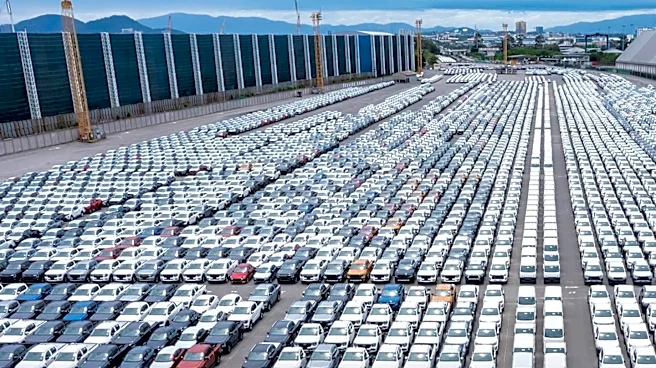
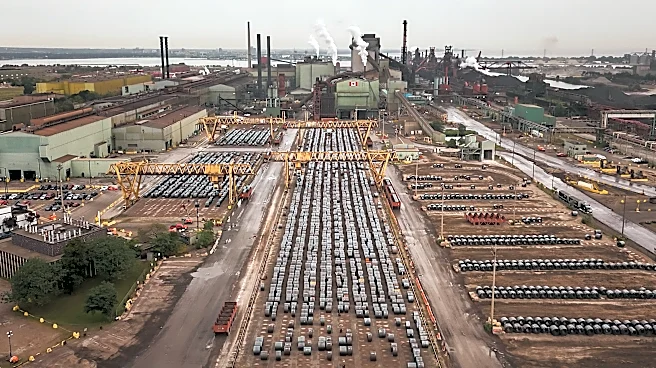
President Donald Trump has declared that the United States will implement a 50% tariff on Canadian automobiles, trucks, automotive parts, and steel imports, effective January 1, 2027. This announcement, made via a Truth Social post, signifies a major
escalation in the ongoing trade dispute between the U.S. and Canada. Currently, Canadian vehicles face a 25% U.S. tariff, with adjustments for American-made content, while steel imports already incur a 50% duty. The proposed increase follows a breakdown in trade negotiations between Washington and Ottawa, and comes after President Trump unveiled new tariffs in late July affecting 99% of U.S. imports. Canada's Prime Minister Mark Carney has pledged retaliatory measures, expected to begin on September 8, targeting U.S. goods such as steel, dairy products, appliances, agricultural equipment, pulp and paper, and electronics. This move by President Trump is justified under Section 338 of the Tariff Act of 1930, a rarely used law allowing duties of up to 50% against countries deemed to discriminate against U.S. commerce.
Why It's Important?
The imposition of a 50% tariff on Canadian automotive and steel imports carries significant implications for the deeply integrated North American auto industry and the broader U.S.-Canada trade relationship. The modern North American auto production relies on components frequently crossing the U.S.-Canada border, meaning these tariffs could severely disrupt supply chains and increase costs for automakers, suppliers, and ultimately, consumers. Higher import costs are likely to translate into more expensive new vehicles, replacement parts, and repairs for U.S. consumers. Automakers, including major players like General Motors, Ford, Toyota, and Honda, which operate plants in Canada, may be forced to reconsider production schedules, investment plans, and sourcing strategies. This escalation could also lead to Canadian manufacturers facing declining U.S. orders, while American companies dependent on Canadian inputs might experience increased costs. The trade dispute represents a sharp deterioration in one of the world’s largest and most closely connected trading relationships, with Canada sending approximately 72% of its goods exports to the United States, making it particularly vulnerable to a prolonged conflict.
What's Next?
The January 1, 2027, deadline for the tariffs provides a window for both the United States and Canada to potentially resume negotiations, revise the proposal, or agree on industry-specific exemptions. However, businesses are expected to begin contingency planning immediately to mitigate the anticipated impacts. Automakers may accelerate efforts to localize U.S. production, diversify their suppliers, and adjust vehicle pricing in response to the looming tariffs. The Canadian government, under Prime Minister Mark Carney, has already committed to dollar-for-dollar retaliatory tariffs, which are expected to take effect on September 8. The final impact of these proposed tariffs will largely depend on whether Washington and Ottawa can reach a resolution before the 2027 implementation date. The ongoing trade war is poised to test the future of North American economic integration, with potential long-term consequences for cross-border commerce and industry stability.
Beyond the Headlines
Beyond the immediate economic ramifications, this tariff escalation highlights a broader shift in U.S. trade policy under President Trump, emphasizing protectionism and the use of tariffs as a tool for leverage in international negotiations. The administration's argument that Canada imposes unfair trade barriers against U.S. goods, including dairy products and alcohol, underscores a persistent point of contention. Critics argue that such measures, while intended to protect domestic producers and encourage manufacturing within the U.S., could ultimately reduce competitiveness, disrupt established supply chains, and lead to higher consumer prices. The reliance on Section 338 of the Tariff Act of 1930, a rarely invoked law, signals a willingness to employ aggressive trade tactics. This approach could set a precedent for future trade disputes, potentially impacting other U.S. trading partners and influencing global trade dynamics. The long-term implications include a potential re-evaluation of international trade agreements and a move towards more localized production, which could reshape global supply chains and economic interdependence.