



What's Happening?
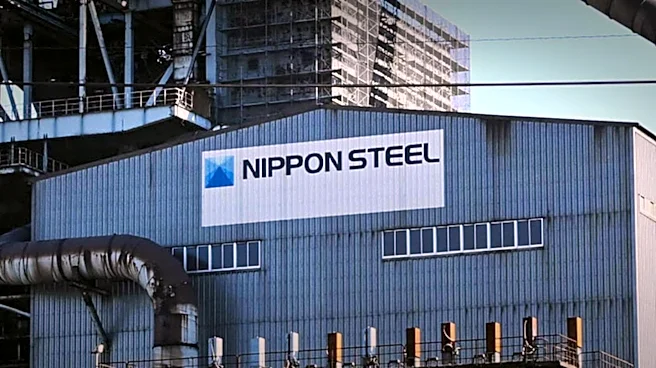
Nippon Steel has increased its annual business profit forecast for U.S. Steel, which it acquired in June 2025, to approximately ¥230 billion ($1.46 billion), up from ¥180 billion. This revised forecast was announced in November 2026. The acquisition,
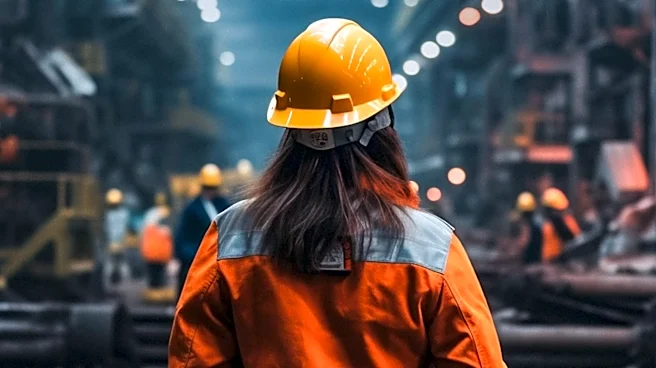
valued at $14.1 billion, initially faced political opposition due to concerns about a Japanese corporation owning an iconic American company. Despite these concerns, Nippon Steel completed the deal and has since demonstrated a commitment to American manufacturing. In October, the company approved nearly $3 billion for a new steel mill project in Pennsylvania, contributing to its broader $11 billion investment commitment in the U.S. These developments suggest that U.S. Steel is performing encouragingly under Nippon Steel's ownership, with a focus on strengthening and modernizing its operations.
Why It's Important?
This development is significant for the U.S. steel industry and American manufacturing. The increased profit forecast for U.S. Steel under Nippon Steel's ownership indicates a potentially positive trajectory for the company, suggesting improved competitiveness and profitability. The substantial investment in a new Pennsylvania steel mill underscores a commitment to domestic production and job creation within the U.S. This could lead to a more robust and technologically advanced steel sector, which is crucial for various American industries, including automotive and construction. The initial political opposition to the acquisition highlighted concerns about foreign ownership of key American industries; however, Nippon Steel's subsequent actions, particularly its investment in U.S. manufacturing, may alleviate some of these concerns by demonstrating a dedication to strengthening American industrial capabilities. The long-term success of this acquisition could serve as a model for future foreign investments in critical U.S. sectors.
What's Next?
The long-term results of Nippon Steel's acquisition of U.S. Steel remain to be fully seen, but the current trajectory suggests continued investment and modernization efforts. The new steel mill project in Pennsylvania, with its nearly $3 billion allocation, will proceed, aiming to enhance U.S. steel production capabilities. Further integration and operational efficiencies are likely to be pursued by Nippon Steel to maximize the profitability and competitiveness of U.S. Steel. Stakeholders, including policymakers, labor unions, and industry competitors, will likely monitor the progress of these investments and U.S. Steel's performance. The success of these initiatives could influence future policy discussions regarding foreign direct investment in strategic U.S. industries and potentially encourage more international companies to invest in American manufacturing, provided they demonstrate similar commitments to domestic growth and job creation.
Beyond the Headlines
Beyond the immediate financial and operational aspects, this situation touches upon broader themes of economic nationalism versus globalized industry. The initial political opposition to the acquisition reflected a sentiment of protecting 'iconic American companies' from foreign ownership. However, Nippon Steel's subsequent actions, particularly its significant investment in American manufacturing and the improved profit forecast for U.S. Steel, challenge the simplistic notion that foreign ownership inherently harms domestic industries. This case highlights that the nationality of ownership might be less critical than the owner's commitment to investment, modernization, and job creation within the host country. It also raises questions about the criteria used to evaluate foreign acquisitions of U.S. companies, suggesting that a focus on long-term economic benefits and industrial strengthening might be more beneficial than solely considering national origin. The ethical dimension involves balancing national security and economic sovereignty with the benefits of global capital and technological exchange.