


What's Happening?
The luxury handbag market is experiencing a debate between viewing high-end bags as financial assets and simply enjoying them for personal style. Social media trends often emphasize resale prices and investment potential, leading collectors to focus on which
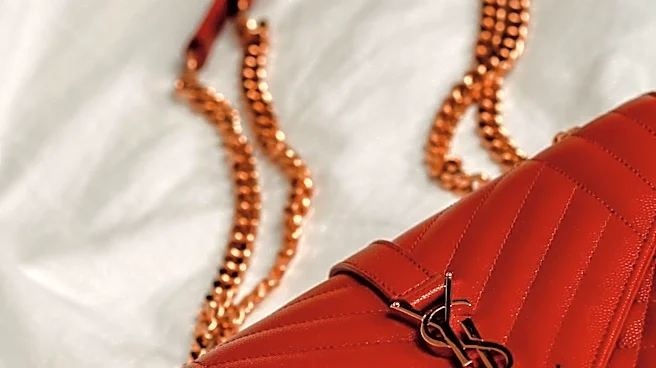
purchases will retain or increase in value. Brands like Hermès and Chanel are central to this discussion, with collectors often seeking to build curated collections that balance desirability and resale resilience. For instance, vintage Chanel, known for its softer leather and 24K gold-plated hardware, has seen renewed attention, while the new 'Blazy era' Chanel offers contemporary materials and larger sizes. Hermès collectors also consider non-quota pieces and the importance of their relationship with sales associates. The focus is shifting towards whether personal enjoyment and style should outweigh the concern for future investment value in luxury handbag acquisitions.
Why It's Important?
This shift in perspective within the luxury handbag market has significant implications for both consumers and the industry. For consumers, it challenges the notion that every luxury purchase must be a financial investment, potentially freeing them to choose bags based purely on aesthetic appeal and personal preference. This could lead to a more diverse range of styles and brands being sought after, moving beyond the traditionally 'investment-worthy' models. For the luxury industry, it highlights the need to balance heritage and innovation. Brands like Chanel, by introducing new designs, are catering to evolving tastes while still acknowledging the enduring appeal of their vintage pieces. This dynamic influences production strategies, marketing campaigns, and how brands engage with their clientele, emphasizing the emotional connection to luxury items rather than solely their monetary value. It also impacts the resale market, as a greater emphasis on personal enjoyment might lead to less concern over maximizing resale value, potentially altering market dynamics.
What's Next?
The ongoing discussion about the intrinsic value versus investment potential of luxury handbags is likely to continue shaping consumer behavior and brand strategies. We may see luxury brands further emphasize craftsmanship, unique designs, and the emotional connection buyers have with their products, rather than solely promoting their resale value. This could involve more personalized shopping experiences and a focus on storytelling around each piece. Collectors might increasingly prioritize 'cost per wear' and how much they genuinely love and use a bag over its potential appreciation. The resale market will need to adapt to these changing consumer priorities, potentially by highlighting the longevity and timelessness of certain pieces rather than just their monetary return. Additionally, the influence of social media in shaping these perceptions will remain crucial, with content creators potentially shifting their focus from investment tips to style inspiration and personal expression.
Beyond the Headlines
Beyond the immediate market trends, this debate touches upon deeper cultural and psychological aspects of luxury consumption. It questions the commodification of personal style and the pressure to justify high-value purchases through financial metrics. The idea of a 'meaningful collection' that reflects a collector's taste, lifestyle, and experiences suggests a move towards more mindful consumption, where items are cherished for their personal significance rather than their market value. This could foster a more authentic relationship between consumers and luxury goods, moving away from a purely transactional mindset. It also highlights the evolving definition of 'luxury' itself, from an exclusive status symbol to an expression of individual identity and passion. The emphasis on the 'joy of actually carrying the bag you love' underscores a return to the fundamental pleasure of owning beautiful objects, rather than viewing them as mere speculative assets.