



What's Happening?
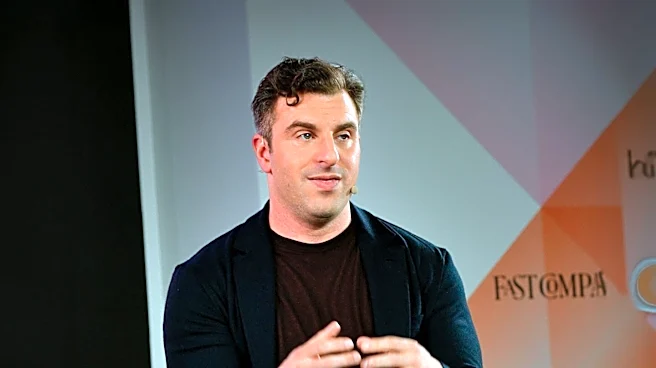
Brian Chesky, CEO and co-founder of Airbnb, has stated that generative AI, particularly the launch of ChatGPT, has fundamentally altered his perspective on entrepreneurship. Chesky, 45, expressed a desire to be in his mid-20s again, the age at which he began
building Airbnb, due to the enhanced capabilities AI tools offer aspiring founders. He believes these tools enable individuals to create products and businesses with significantly fewer resources than were required two decades ago. While acknowledging concerns about job displacement, Chesky argues that AI empowers individuals to develop their own ventures, making it easier to start a company today than in the past. He co-founded Airbnb in 2008, a period marked by the rise of smartphones and social media, and now sees similar transformative potential in the current AI landscape. He envisions the AI era fostering hundreds of large companies and tens of millions of smaller businesses, emphasizing that a small group of people can now launch a company, a concept he previously considered inconceivable.
Why It's Important?
Chesky's insights underscore a significant shift in the U.S. entrepreneurial landscape, driven by advancements in generative AI. His perspective suggests a democratization of business creation, where the barrier to entry for new ventures is lowered due to reduced resource requirements. This could lead to a surge in startups across various sectors, potentially disrupting established industries and fostering innovation. For the U.S. economy, this could mean increased job creation, particularly in technology and related fields, and a more dynamic market with diverse product and service offerings. However, his acknowledgment of job displacement concerns highlights a critical societal challenge. While AI empowers some, it may necessitate workforce retraining and new economic policies to support those whose jobs are impacted. The potential for an 'AI Disney' also points to significant transformations in entertainment and storytelling, indicating that AI's influence extends beyond traditional tech sectors into creative industries, potentially reshaping how content is produced and consumed.
What's Next?
In the immediate future, Chesky encourages individuals to experiment with new AI tools, even if the learning process seems daunting. He suggests learning from colleagues, friends, or online tutorials and actively engaging with the technology. This call to action implies a need for broader AI literacy and skill development across the workforce. For entrepreneurs, the focus will likely be on identifying and leveraging AI's capabilities to build innovative products and services, particularly in areas like education and healthcare, which Chesky identified as having significant potential. The development of 'AI Disney' type ventures could lead to new forms of entertainment and interactive experiences. Over the longer term, the U.S. will need to address the dual impact of AI: fostering its growth for economic benefit while mitigating its potential negative effects on employment and societal structures. This will likely involve ongoing discussions about policy, education, and ethical guidelines for AI development and deployment.
Beyond the Headlines
The deeper implications of Chesky's observations extend to the very nature of work and creativity. The idea that AI can enable individuals to create their own products challenges traditional employment models and could lead to a more freelance or gig-economy-centric future, albeit one powered by advanced tools. This shift could redefine career paths and the concept of a 'company,' moving towards smaller, more agile teams capable of significant output. Ethically, the ease of content creation through AI raises questions about originality, intellectual property, and the potential for AI-generated content to saturate various markets. Culturally, the concept of an 'AI Disney' suggests a future where AI plays a central role in shaping narratives and entertainment, potentially altering human-computer interaction and the consumption of media. The long-term societal impact will depend on how effectively individuals and institutions adapt to these changes, balancing the immense creative and economic potential of AI with the need for responsible development and equitable access.