
What's Happening?
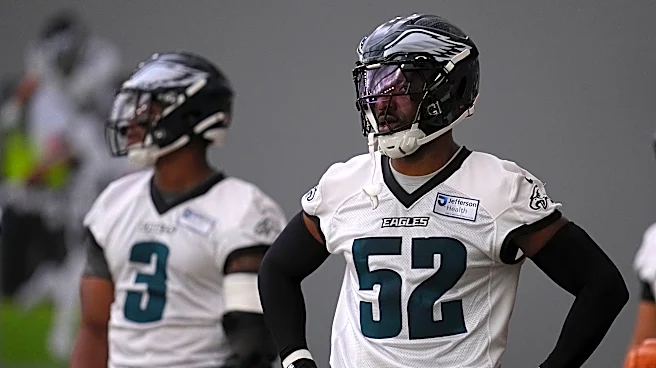
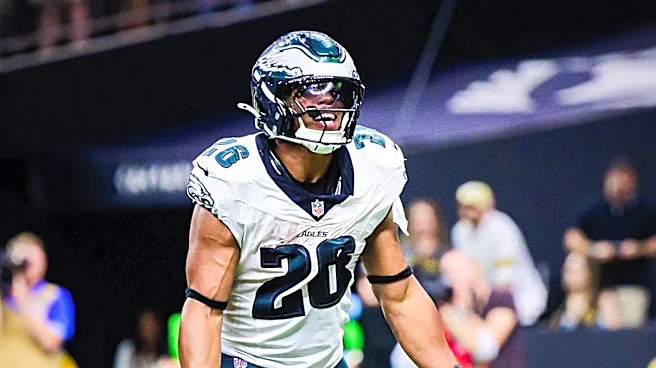
Alec Halaby, a former assistant general manager for the Philadelphia Eagles, has left the organization after nearly two decades. Known for his analytical approach, Halaby was a trusted advisor to Howie
Roseman, the Eagles' general manager. Despite his Harvard education and analytical skills, Halaby faced challenges within the organization, particularly from head coaches who preferred traditional football methods. His departure highlights the ongoing tension between analytics and traditional scouting in the NFL. Halaby's efforts to bridge these worlds were met with resistance, impacting his relationships within the team. Although he was considered for several general manager positions, Halaby's analytical background was seen as a barrier in a league that still favors traditional scouting.
Why It's Important?
Halaby's departure underscores the broader struggle within the NFL between analytics and traditional football strategies. While analytics have gained traction in sports like baseball and basketball, the NFL remains largely traditionalist. This situation reflects a significant cultural and operational divide within the league, affecting team dynamics and decision-making processes. The resistance to analytics-heavy approaches could limit the NFL's ability to innovate and adapt to modern sports management trends. Teams that embrace analytics may gain a competitive edge, while those that resist could fall behind. Halaby's experience highlights the challenges faced by analytically-minded professionals in a league that values traditional scouting.
What's Next?
As the NFL continues to evolve, the integration of analytics into team strategies will likely remain a contentious issue. Teams may need to find a balance between traditional scouting and modern analytical methods to stay competitive. The departure of figures like Halaby could prompt organizations to reassess their approach to analytics and consider how best to integrate these insights into their operations. Future general manager candidates with analytical backgrounds may face similar challenges unless the league's culture shifts to embrace a more data-driven approach.