


What's Happening?
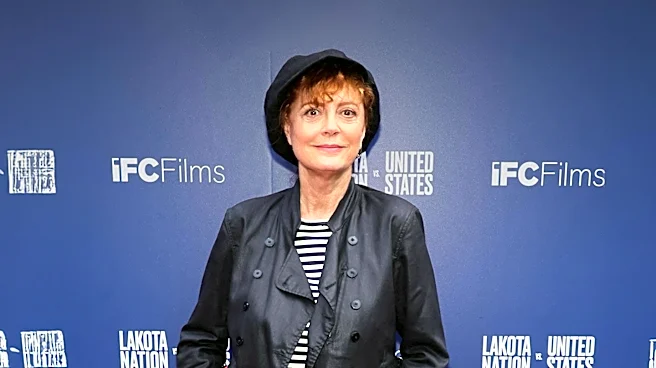
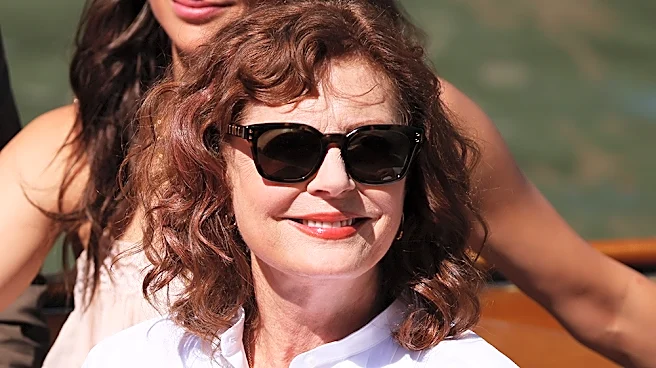
Oscar-winning actress Susan Sarandon has revealed that she continues to lose movie roles due to her public support for Palestine. Speaking at the Venice Film Festival while promoting her new film 'The Echo Chamber', Sarandon stated that agencies are still
advising against hiring her. She noted a shift in public perception regarding the historical relevance of Palestine and the financial ties between the United States and Israel, but acknowledged that certain positions within her industry are still held by individuals who maintain negative views towards her stance. Sarandon was previously dropped by her agency, UTA, in 2023 following comments made at a pro-Palestinian rally, where she called for a ceasefire in Gaza. Despite the ongoing backlash, she expressed feeling welcomed by the general public and internationally.
Why It's Important?
This situation underscores the significant and often career-altering consequences that political activism can have for individuals in the entertainment industry. Sarandon's experience highlights the ongoing tension between artistic freedom and political expression, particularly when views diverge from mainstream or powerful industry sentiments. The reported blacklisting by agencies and production entities can severely limit an actor's opportunities, impacting their livelihood and ability to participate in their chosen profession. It also brings to light the influence of political leanings within Hollywood's power structures and how these can shape casting decisions and project funding. The divide Sarandon describes between public sentiment and industry gatekeepers suggests a complex landscape where public opinion may be shifting, but institutional resistance remains strong, affecting the careers of those who take controversial political stances.
What's Next?
Sarandon's continued presence in films like 'The Echo Chamber', where she plays a supporting role, suggests that some filmmakers and producers are willing to cast her despite industry pressures. The film, which premiered at the Venice Film Festival and is scheduled for an Italian theatrical release, indicates that her career is not entirely halted, though it may be redirected towards independent or international productions. Her comments suggest a potential for continued advocacy on her part, as she feels a connection with a broader public that supports her views. The ongoing debate surrounding the Israeli-Palestinian conflict ensures that this issue will remain a sensitive and potentially divisive topic within Hollywood, meaning other public figures who express similar views might face comparable professional challenges. Sarandon's situation could also inspire further discussions about freedom of speech and political expression within the entertainment sector.
Beyond the Headlines
Sarandon's experience delves into the deeper implications of cancel culture and its impact on public figures, particularly in an industry as visible as entertainment. It raises questions about the extent to which artists should be held accountable for their political opinions and whether such accountability should translate into professional ostracization. The narrative also touches upon the evolving media landscape, where public discourse on international conflicts is increasingly shaped by social media and direct communication, sometimes bypassing traditional media filters. Sarandon's assertion that the 'narrative has completely changed' among the general public, contrasted with persistent industry resistance, points to a growing divergence between popular sentiment and institutional power. This dynamic could lead to a re-evaluation of how Hollywood navigates political issues and supports its talent, especially as younger generations with different political sensibilities gain influence.