




What's Happening?
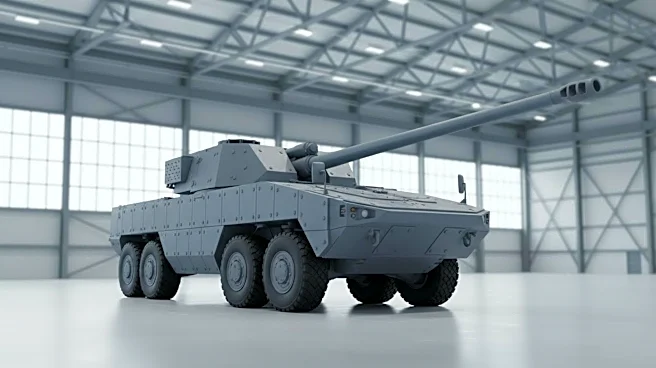
Hanwha Defense USA (HDUSA) has been awarded its first major contract with the U.S. Army. The agreement involves delivering prototype K9 Mobile Howitzers (K9MH) for the Army’s new Mobile Tactical Cannon (MTC) program. This initial contract provides for the accelerated
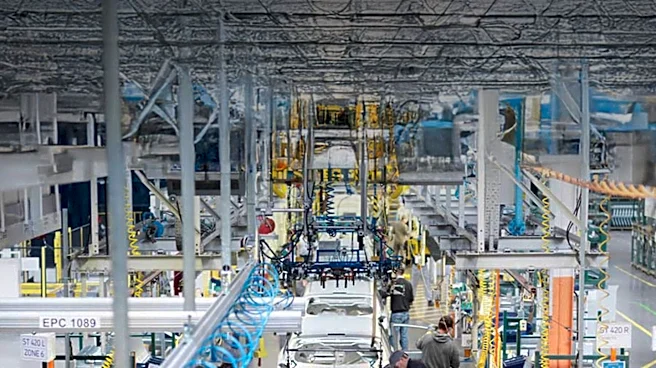
delivery of six prototype MTC systems, with an option for an additional 12. HDUSA, a subsidiary of Hanwha Aerospace, will supply a 155 mm artillery system designed to support the U.S. Army’s modernization goals and long-range precision fires objectives. The K9 Howitzer platform has a global presence, with over 2,500 units already fielded worldwide. Hanwha plans to establish high-volume industrial capacity in the U.S., leveraging its existing wartime production ethos. As part of this strategy, HDUSA is setting up a Phase I site in Opelika, Alabama, which will serve as the U.S. integration and test facility for its K9 Mobile Howitzer family. The company has signed a three-year lease for this facility, demonstrating its commitment to investing in the U.S. artillery system supply chain and enhancing America’s combat vehicle industrial base.
Why It's Important?
This contract signifies a significant step in strengthening the U.S. defense industrial base and modernizing the U.S. Army's artillery capabilities. By selecting Hanwha’s K9MH, the U.S. Army gains access to a proven and widely adopted artillery system, aligning it with nearly a dozen allied nations that already utilize the K9. This shared platform facilitates a global industrial network and supply chain, enhancing interoperability and logistical efficiency among allies. For the U.S. economy, Hanwha’s phased-in localization strategy, including domestic production and support, is expected to bring advanced manufacturing techniques and create jobs within the defense sector. The establishment of the Opelika, Alabama facility underscores a long-term commitment to U.S. manufacturing and technology transfer, contributing to sovereign industrial strength. This partnership aims to provide the U.S. Army with a more modern and lethal force, capable of delivering devastating capability at speed and scale, while also bolstering American industrial capacity in combat vehicle production.
What's Next?
HDUSA will proceed with the accelerated delivery of the initial six prototype K9 Mobile Howitzer systems to the U.S. Army, with the potential for an additional 12 units. The company will continue to develop its Phase I integration and test facility in Opelika, Alabama, which is crucial for establishing U.S.-based production and support for the K9MH. Hanwha Defense USA plans to evaluate future phases and locations as it expands its U.S. artillery systems footprint and production capacity. This expansion will involve engaging with domestic suppliers and developing a skilled workforce to support long-term sustainment and technology insertion activities. The U.S. Army will integrate these new systems into its modernization efforts, particularly for its long-range precision fires objectives. This partnership is expected to foster broader industrial collaboration and technology transfer, further solidifying Hanwha’s role as a long-term artillery modernization partner for the U.S. Army.
Beyond the Headlines
The selection of Hanwha’s K9 Mobile Howitzer by the U.S. Army extends beyond a simple procurement deal; it represents a strategic shift towards leveraging international defense technologies to enhance domestic capabilities. This move highlights a growing trend in defense procurement where proven foreign systems are localized to strengthen national industrial bases and foster interoperability with allies. The emphasis on a 'wartime production ethos' by Hanwha suggests a focus on rapid, high-volume manufacturing, which is critical in an evolving global security landscape. Furthermore, the establishment of U.S.-based manufacturing facilities by international defense contractors like Hanwha signifies a deeper integration of global supply chains into the American defense industrial complex. This could lead to increased competition, innovation, and resilience within the U.S. defense sector, while also raising questions about intellectual property sharing and the long-term balance between domestic and international defense production capabilities.