




What's Happening?
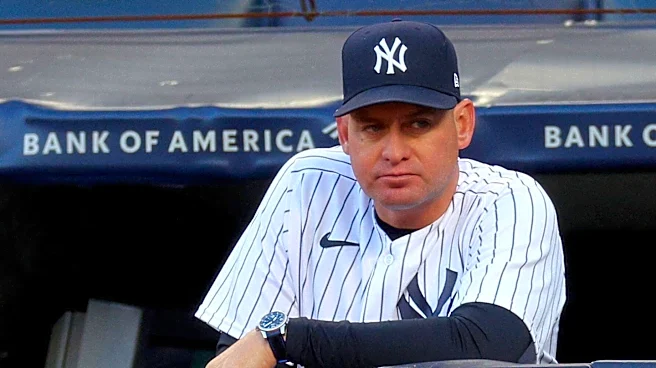
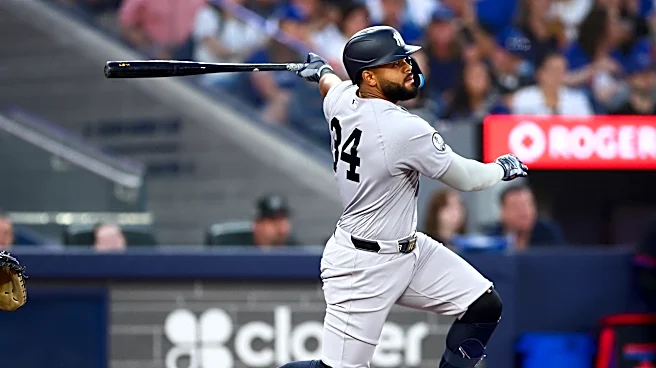
New York Yankees manager Aaron Boone is publicly reaffirming his support for outfielder Heliot Ramos, despite Ramos's challenging start with the team. Before Wednesday's game, Ramos held a .371 OPS as a Yankee, yet he has consistently been placed in the third
or fourth batting order position. Boone acknowledged that Ramos might be feeling pressure to perform, stating, “I think there’s a level of, ‘He wants to show us,’ but we know we got a good player here and a good hitter.” Boone also noted that Ramos has integrated well into the team environment. According to Gary Phillips of the New York Daily News, Boone believes Ramos has experienced some 'tough luck,' citing a significant .121-point difference between his .178 weighted on-base average (wOBA) and his .299 expected weighted on-base average (xwOBA) since August 4. This discrepancy is the second-largest among major league players with at least 40 plate appearances during that period, suggesting that Ramos's underlying performance metrics are better than his actual results.
Why It's Important?
Boone's continued backing of Heliot Ramos is significant for several reasons. For the Yankees, it signals a commitment to player development and a belief in Ramos's long-term potential, even when immediate results are lacking. This approach can foster a supportive team culture, which is crucial for player morale and performance, especially for new acquisitions trying to prove themselves. For Ramos, the public vote of confidence from his manager can alleviate some of the pressure he might be feeling, potentially allowing him to relax and perform closer to his capabilities. The statistical analysis highlighting the gap between his wOBA and xwOBA suggests that Ramos is hitting the ball better than his batting average indicates, implying that better results could be on the horizon. This data-driven perspective provides a rationale for Boone's patience and could influence how other teams evaluate struggling players, emphasizing underlying metrics over raw output in the short term. The Yankees' investment in Ramos, both in terms of lineup placement and managerial support, indicates their strategic vision for his role in the team's future.
What's Next?
The immediate focus for Heliot Ramos will be to translate his underlying performance metrics into tangible on-field results. With manager Aaron Boone's continued support and a consistent spot in the batting order, Ramos will have opportunities to adjust and improve. The Yankees will likely continue to monitor his advanced statistics, such as xwOBA, to assess his progress beyond traditional batting averages. If Ramos's luck begins to normalize, as suggested by the discrepancy between his wOBA and xwOBA, his on-base percentage and slugging could see an uptick. This could solidify his position in the lineup and contribute more significantly to the team's offensive production. Conversely, if his struggles persist despite the favorable underlying metrics, the team might need to re-evaluate his role or provide additional coaching support. The ongoing situation will be a test of the Yankees' player development philosophy and their patience with a player they believe has high potential.
Beyond the Headlines
The situation with Heliot Ramos and Aaron Boone highlights a broader trend in professional sports: the increasing reliance on advanced analytics to evaluate player performance and potential. While traditional statistics like batting average and OPS remain important, metrics like xwOBA offer a deeper insight into a player's true skill by accounting for factors like exit velocity and launch angle, which are less susceptible to luck. Boone's emphasis on Ramos's xwOBA suggests a sophisticated understanding of player evaluation, moving beyond immediate outcomes to underlying processes. This approach can lead to more patient player development strategies, as teams are less likely to prematurely give up on players who are performing well by advanced metrics but are experiencing bad luck. Ethically, this also raises questions about how much pressure is placed on players to perform immediately versus allowing them time to develop, especially when analytics suggest they are on the right track. The Yankees' handling of Ramos could serve as a case study for other organizations on how to balance traditional expectations with modern analytical insights in player management.