




What's Happening?
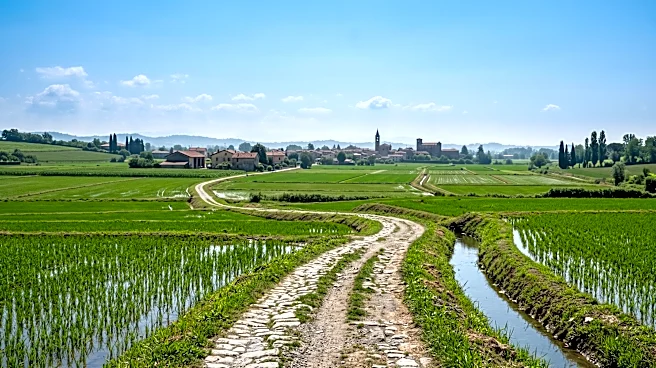
The Lombardy Region and the European Association of the Via Francigena Ways (EAVF) have joined forces to enhance the Lombardy section of the Via Francigena. This collaboration aims to promote slow tourism along the historic route, which traverses villages,
abbeys, rice fields, and water landscapes. A key objective of this partnership is to support the Via Francigena's bid to become a UNESCO World Heritage Site. The initiative focuses on developing and improving the infrastructure and services along the route to attract more visitors interested in sustainable and immersive travel experiences. This effort highlights a growing trend towards appreciating cultural heritage and natural beauty through slower, more deliberate forms of tourism.
Why It's Important?
This initiative is important as it underscores a strategic shift in regional tourism development towards sustainability and cultural preservation. By focusing on 'slow tourism,' the Lombardy Region and EAVF are tapping into a market segment that values authentic experiences, local culture, and environmental responsibility. Achieving UNESCO World Heritage status would significantly elevate the Via Francigena's international profile, potentially drawing a substantial increase in tourism. This could lead to economic benefits for local communities along the route, including job creation and increased revenue for small businesses. Furthermore, the emphasis on preserving historical and natural landscapes ensures that tourism growth is managed in a way that benefits both visitors and residents, promoting a more balanced and respectful interaction with the environment and cultural heritage.
What's Next?
The immediate next steps involve continued development and enhancement of the Lombardy section of the Via Francigena, likely including improvements to signage, accommodation, and visitor services. The EAVF and Lombardy Region will also continue to work on the application process for UNESCO World Heritage status, which typically involves detailed documentation and evaluation. Success in this bid would trigger further promotional activities and potentially lead to increased funding for conservation and development projects. Local communities and businesses along the route can anticipate a rise in visitor numbers and should prepare to accommodate the specific needs of slow tourists, such as demand for local produce, artisanal goods, and authentic cultural interactions. The long-term goal is to establish the Via Francigena as a premier destination for cultural and sustainable tourism.
Beyond the Headlines
The collaboration between the Lombardy Region and EAVF reflects a broader global trend towards sustainable and experiential tourism, moving away from mass tourism models. This approach has deeper implications for how regions manage their cultural and natural assets, prioritizing preservation and authentic engagement over sheer volume. It also highlights the economic potential of heritage routes, which can revitalize rural areas and foster a sense of local pride and identity. The focus on 'slow tourism' encourages travelers to spend more time in a destination, fostering deeper connections with the local environment and communities, and potentially leading to more equitable distribution of tourism benefits. This model could serve as a blueprint for other regions looking to develop their tourism sectors responsibly.