


What's Happening?
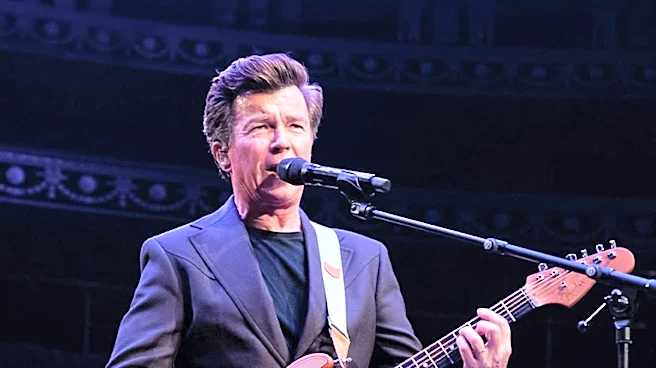
On November 6, 2008, Rick Astley's iconic song "Never Gonna Give You Up" became the center of a significant internet phenomenon when he won the 'Best Act Ever' award at the MTV Europe Music Awards. This victory was the result of an extensive online campaign,
where internet users collectively voted for Astley, leading to approximately 100 million votes in his favor. The campaign leveraged the widespread internet prank known as 'Rickrolling,' which originated in 2007 on the website 4chan. 'Rickrolling' involved tricking users into clicking on a link that unexpectedly led to Astley's music video. The prank gained immense popularity, culminating in YouTube redirecting all its featured videos to the "Never Gonna Give You Up" music video on April Fools' Day 2008. Astley's win at the MTV awards was seen as the peak of this viral trend, effectively 'Rickrolling' thousands of viewers watching the ceremony.
Why It's Important?
This event is important as it marked a pivotal moment in the history of internet culture and its influence on mainstream media and entertainment. The 'Rickrolling' phenomenon demonstrated the power of collective online action to impact real-world events, even in a lighthearted context. It showcased how internet memes could transcend niche online communities and achieve global recognition, influencing award shows and public perception. For Rick Astley, it brought a resurgence of fame and introduced his music to a new generation, solidifying "Never Gonna Give You Up" as one of the most widely recognized songs globally. The incident highlighted the growing convergence of digital and traditional media, where online trends could directly shape outcomes in established entertainment industries, proving that internet users could collectively sway public opinion and voting processes on a massive scale.
What's Next?
Following his 'Best Act Ever' win, Rick Astley continued to embrace his renewed popularity, often incorporating "Never Gonna Give You Up" into his performances, effectively 'Rickrolling' his live audiences. The 'Rickrolling' phenomenon itself has endured as a cultural touchstone, occasionally resurfacing in various forms online. The event set a precedent for how internet communities could mobilize to influence public votes and cultural narratives, a trend that has since been observed in other online campaigns and viral movements. While the immediate impact on Astley's career was a boost in visibility, the broader implication was a demonstration of the internet's capacity to reshape celebrity and public engagement, paving the way for future viral sensations and online-driven cultural shifts. Astley continues to perform, showcasing his versatility beyond his 80s hits.
Beyond the Headlines
The 'Rickrolling' phenomenon and Astley's subsequent award win offer deeper insights into the nature of internet humor, collective identity, and the democratization of influence. It illustrated how a seemingly simple prank could evolve into a global cultural event, fostering a sense of shared experience and inside jokes among internet users. This event also highlighted the unpredictable nature of viral content and how it can unexpectedly elevate individuals or cultural artifacts to new levels of prominence. It underscored the idea that cultural relevance in the digital age is not solely dictated by traditional gatekeepers but can also be shaped by the collective actions and humor of online communities. The 'Best Act Ever' award became less about musical merit and more about a celebration of internet-driven cultural power, marking a significant shift in how influence is wielded and perceived in the entertainment world.