




What's Happening?
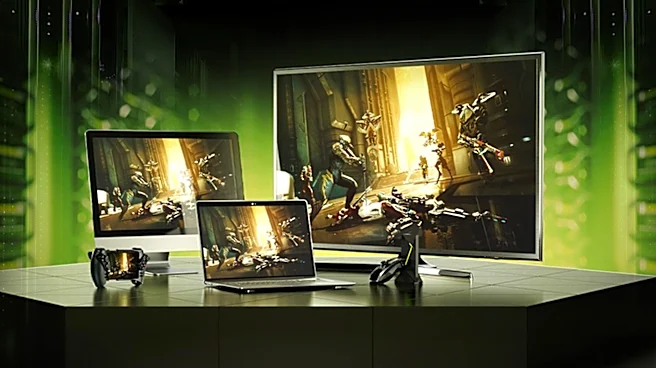
Nvidia has secured a patent for an AI chatbot designed to assist developers in optimizing PC games more efficiently. This innovative chatbot would allow developers to describe optimization issues in plain English, after which the AI would generate and
run diagnostic code specific to the problem. The system aims to simplify a complex and time-consuming process that typically requires specialized knowledge. Examples provided in the patent include queries like, 'What is causing the micro-stutter during camera cuts?' and 'Why is frame time spiking when ray-traced reflections enter the viewport?' The AI would then provide results for interpretation, enabling developers to implement fixes and re-run tests. This development could significantly reduce the time and expertise needed for game optimization, a critical factor as release dates approach.
Why It's Important?
This patent is important because it addresses a significant challenge in the gaming industry: game optimization. Poor optimization can severely impact a game's performance and player experience, leading to negative reviews and reduced sales. By streamlining this process, Nvidia's AI chatbot could empower developers, including those with less specialized knowledge, to create more polished and enjoyable games. This could lead to a higher standard of quality across the PC gaming landscape, benefiting both developers by reducing development cycles and costs, and gamers by providing a smoother, more stable experience. The technology could also democratize game development by making complex optimization tasks more accessible. However, the effectiveness of this tool will depend on the accuracy and reliability of the diagnostic code generated by the AI, and developers will need to trust its capabilities before fully relying on it.
What's Next?
While Nvidia has patented this AI chatbot, it is not guaranteed to become a shipping product. Companies frequently patent technologies that may or may not be commercialized. However, given Nvidia's existing ventures into AI-powered gaming tools, such as G-Assist and DLSS 5, the concept aligns with their strategic direction. If developed, the next steps would likely involve extensive testing and validation of the AI's diagnostic capabilities to ensure accuracy and reliability. Developers would need to evaluate how well the chatbot integrates into existing workflows and whether the generated diagnostic code is trustworthy. Nvidia would also need to clarify how the tool would handle validation and testing of the diagnostic code it creates. The success of such a tool would depend on its ability to consistently provide actionable and correct insights, ultimately making game optimization easier and more effective for the broader developer community.
Beyond the Headlines
The deeper implications of Nvidia's AI optimization chatbot extend to the future of software development and the role of artificial intelligence in creative industries. This tool represents a step towards AI assisting in highly technical and specialized tasks, potentially shifting the skill sets required for game development. While it could free up developers from tedious debugging, it also raises questions about the potential for over-reliance on AI and the need for human oversight to prevent errors or biases in the AI's diagnostics. The ethical dimension involves ensuring that AI-generated solutions are transparent and auditable, especially if they influence critical aspects of game performance. Furthermore, if successful, this model could be replicated in other software development fields, leading to a broader integration of AI in code optimization and debugging across various industries, fundamentally changing how software is built and maintained.