
What's Happening?
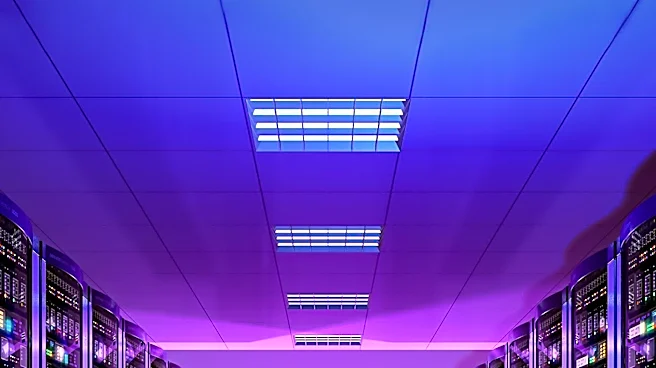
OpenAI, in collaboration with Oracle and other companies, is developing a 2.2 million-square-foot, $43 billion data center in Saline Township, Michigan, as part of its Project Stargate. This massive infrastructure
project is designed to advance artificial intelligence capabilities. Alongside this significant investment, the companies have committed a $10 million donation to the community of Saline. This donation is earmarked for the renovation and expansion of the city's recreation center, which will include upgrades such as new locker rooms, a tiled pool deck, an expanded children's play area, a waterfall, and a lazy river. This initiative comes as AI companies increasingly seek to foster positive community relations in areas hosting their data centers, particularly in response to growing public scrutiny and concerns regarding these facilities.
Why It's Important?
This development highlights a growing trend where AI and tech companies are making substantial investments in local communities to secure approval and support for their large-scale data center projects. The $43 billion data center signifies a major commitment to advancing artificial intelligence infrastructure in the U.S., which has broad implications for technological innovation, economic growth, and national competitiveness in the AI sector. The accompanying $10 million community donation reflects a strategic shift by these companies to address local concerns and provide tangible benefits, such as improved public facilities. This approach is crucial for mitigating potential opposition related to environmental impact, resource consumption, and the perceived lack of direct local benefits from data centers. The success of such community engagement models could influence future development strategies for tech infrastructure across the nation, setting precedents for how large corporations interact with and contribute to host communities.
What's Next?
Construction of the Project Stargate data center in Saline Township is moving forward despite some lingering community opposition. Local officials, like Saline Mayor Brian Marl, continue to engage with residents who express concerns about the project, even as the $10 million donation for the recreation center has been secured. This situation underscores the ongoing challenge for AI companies to fully win over public opinion, even with significant financial contributions. Future developments will likely involve continued monitoring of the data center's impact on local resources, such as water and energy, and the fulfillment of any additional community benefit agreements. The effectiveness of these 'sweetener' deals in fostering long-term community acceptance will be closely watched, potentially influencing how other states and localities negotiate with tech developers in the absence of comprehensive federal or state regulations.
Beyond the Headlines
The strategy of offering substantial community donations, while seemingly beneficial, also raises deeper questions about the nature of corporate influence and local governance. While these agreements can fill gaps in public funding and provide much-needed infrastructure improvements, they also highlight the uneven playing field between well-resourced corporations and smaller communities. The effectiveness of these donations in genuinely shifting public sentiment is mixed, as evidenced by continued local resistance in Saline and other areas. This dynamic points to a broader societal debate about the responsibilities of large tech companies, the balance between economic development and community well-being, and the need for more robust regulatory frameworks to ensure transparency and accountability in data center development. The long-term implications include potential shifts in local economies, environmental impacts, and the evolving relationship between technological advancement and community integration.