








What's Happening?
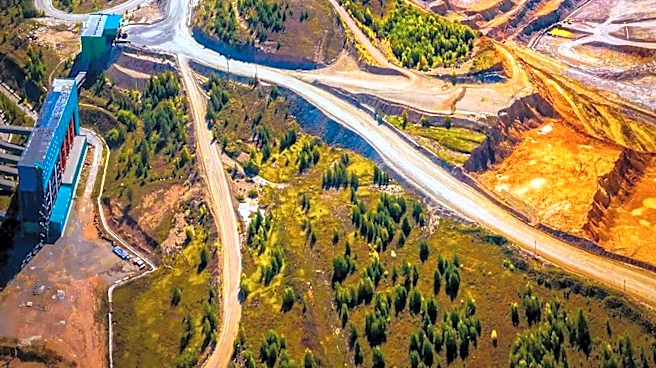
Agnico Eagle, a leading Canadian mining company, has reported a significant rock mass movement at the Barnat open pit within the Canadian Malartic mine. This geological event is expected to impact the company's gold production in the latter half of 2026.
While the production for the second quarter of 2026 was unaffected, with an output of approximately 845,000 ounces of gold, the company anticipates a reduction in production by 60,000 to 80,000 ounces in the second half of the year. Consequently, Agnico Eagle expects its full-year production to be at the lower end of its previously forecasted range of 3.3 to 3.5 million ounces of gold. The company is currently conducting a geotechnical assessment to determine a safe timeline for resuming operations at the affected site.
Why It's Important?
The rock mass movement at the Canadian Malartic mine poses significant implications for Agnico Eagle's operational and financial performance. As one of the largest gold producers globally, any disruption in production can affect the company's market position and investor confidence. The anticipated reduction in gold output could lead to financial adjustments and impact the company's revenue projections. Additionally, this event underscores the inherent risks in mining operations, highlighting the importance of robust risk management and contingency planning. The situation also has broader implications for the gold market, potentially influencing gold prices due to changes in supply dynamics.
What's Next?
Agnico Eagle plans to provide further updates on production and cost guidance with its second-quarter results, scheduled for release on July 29, 2026. The company will continue its geotechnical assessment to refine the timeline for safely restarting operations at the Barnat open pit. Stakeholders, including investors and industry analysts, will be closely monitoring these developments. The company's ability to manage this disruption effectively will be crucial in maintaining its reputation and financial stability. Additionally, the outcome of this situation may influence future operational strategies and investment decisions within the mining sector.