
What's Happening?
Thaddeus Ladd, chief scientist of the Computational Physics Division at HRL Laboratories, stated that quantum computing is unlikely to lead to the same resource-intensive data center expansion currently
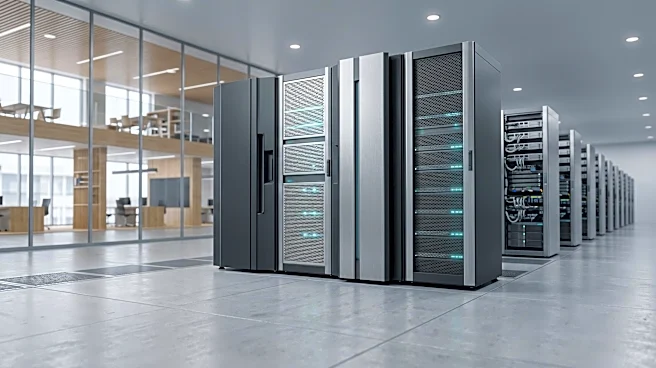
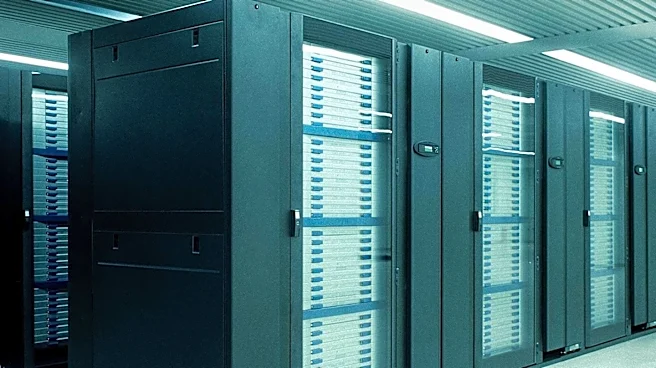
being driven by artificial intelligence (AI). Ladd made these remarks during a U.S. Foreign Press Center reporting tour focused on American innovation and emerging technologies. While acknowledging the significant potential of quantum computers for specialized applications, such as simulating molecules for materials development and designing improved metals, Ladd believes these applications will primarily serve large companies and specialized fields rather than generating broad consumer demand like AI. He anticipates that quantum computing will be a commercial product that integrates into existing data centers as a 'negligible addition,' operating alongside conventional computing infrastructure for specific workloads rather than replacing it. This perspective contrasts with the rapid expansion of AI-related data center infrastructure, which demands substantial electricity, water, and other resources.
Why It's Important?
This assessment from a leading scientist provides a crucial perspective on the future infrastructure demands of quantum computing, differentiating it from the current trajectory of AI. If quantum computing does not require a comparable build-out of data centers, it could alleviate concerns about energy consumption and environmental impact associated with the rapid growth of computing infrastructure. For businesses and investors, this suggests that while quantum computing offers specialized advantages, it may not present the same large-scale infrastructure investment opportunities as AI. Instead, the focus might be on integrating quantum capabilities into existing systems for niche, high-value applications. This distinction is vital for strategic planning in the technology sector, influencing decisions on resource allocation, research and development priorities, and long-term market expectations for both quantum computing and AI.
What's Next?
As quantum computing continues to develop, the focus will likely remain on overcoming challenges related to errors, scalability, and operational difficulties. Companies like IBM, which recently acquired HRL Laboratories, are actively working on developing more capable quantum systems and scaling manufacturing technologies. IBM's roadmap includes the development of fault-tolerant quantum computers like IBM Quantum Starling by 2029 and Blue Jay by the mid-2030s, aiming for significantly greater computational capabilities. The integration of HRL's research into silicon-spin qubits with IBM's superconducting quantum computers is expected to advance these efforts. The industry will continue to explore how quantum systems can best operate alongside conventional computing infrastructure for specialized workloads, with ongoing research into whether quantum advances could eventually reduce overall energy and infrastructure requirements for computing.
Beyond the Headlines
The differing infrastructure demands of quantum computing and AI highlight a broader trend in technological development: not all revolutionary technologies will follow the same growth patterns or have identical societal impacts. While AI is poised to permeate a wide range of industries and consumer applications, driving massive infrastructure investments, quantum computing appears to be carving out a more specialized, albeit profoundly impactful, role. This distinction could lead to a more diversified technological ecosystem, where different advanced computing paradigms address distinct sets of problems. It also raises questions about the long-term sustainability of computing infrastructure, as the energy and resource demands of AI continue to escalate. The development of quantum computing, if it remains less resource-intensive, could offer a complementary path for solving complex problems without exacerbating the environmental footprint of the digital age.