



What's Happening?
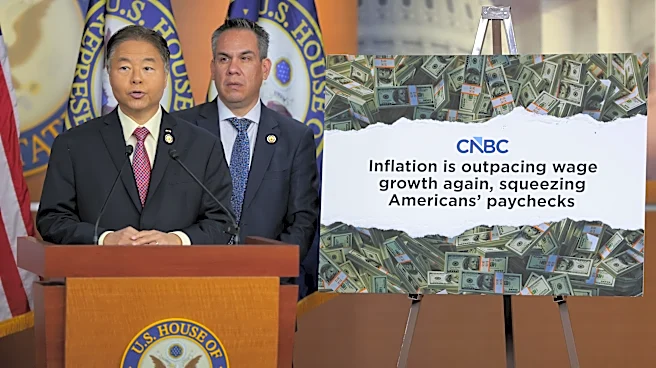
In the U.S., wage growth is currently not keeping pace with the rate of inflation, leading to a reduction in consumers' purchasing power. According to consensus estimates, average hourly earnings growth in October is projected to increase by 0.3% month-over-month,
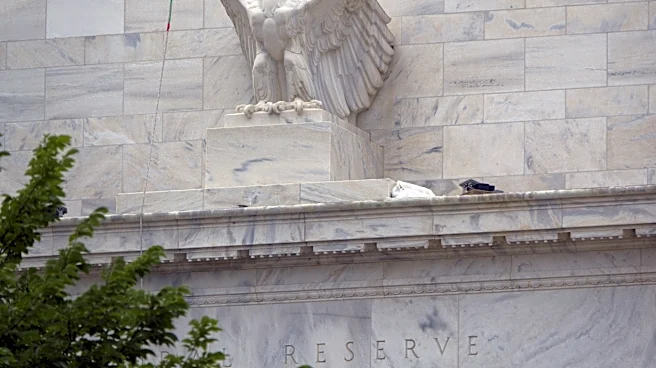
translating to a 2.9% year-over-year rise. This is a decrease from the 3.0% advance observed in September. In contrast, the headline Personal Consumption Expenditures (PCE) inflation, as reported by the Bureau of Economic Analysis, rose by 3.6% in September. This disparity means that the income of American consumers is not increasing sufficiently to offset the rising cost of goods and services. Experts like Dan North, chief economist at Allianz Trade North America, note that inflation has become 'very sticky' and has remained elevated for several months. Salem Abraham, president at Abraham Trading Company, suggests that current 'sticky inflation' is more closely tied to energy costs than labor costs, indicating that interest rate hikes alone may not resolve the issue. The Federal Reserve, with a stable labor market, continues to prioritize addressing inflation.
Why It's Important?
The persistent gap between wage growth and inflation has significant implications for the U.S. economy and its citizens. When wages fail to keep up with rising prices, the real income of households declines, directly impacting their ability to afford essential goods and services. This erosion of purchasing power can lead to decreased consumer spending, which is a major driver of economic growth. For businesses, this dynamic can create pressure on profit margins as they face higher input costs due to inflation, while consumers are less able to absorb price increases. The Federal Reserve's focus on combating inflation through monetary policy, such as interest rate hikes, aims to stabilize prices. However, if inflation is primarily driven by external factors like energy costs, as some experts suggest, then monetary policy alone may not be fully effective, potentially leading to prolonged economic strain for consumers and businesses alike. The situation highlights a critical challenge for policymakers in balancing inflation control with supporting wage growth and economic stability.
What's Next?
The Federal Reserve is expected to continue its focus on controlling inflation, with the possibility of further interest rate hikes. Historically, the central bank typically implements multiple hikes to achieve price stability, making it unlikely that the single hike in September will be the last. However, the effectiveness of these rate hikes in addressing inflation primarily driven by energy costs remains a subject of debate among economists. If energy prices continue to be a significant factor, inflation could remain 'sticky,' necessitating a sustained effort from the Fed. Consumers should anticipate continued pressure on their purchasing power if wage growth does not accelerate to match or exceed inflation. Businesses may need to adapt to an environment of elevated costs and potentially constrained consumer spending. The ongoing stability of the labor market will be a key factor influencing the Fed's decisions and the overall economic outlook.
Beyond the Headlines
The divergence between wage growth and inflation points to a deeper economic challenge that extends beyond immediate price and income figures. This trend can exacerbate wealth inequality, as lower-income households, who typically have fewer financial buffers, are disproportionately affected by rising costs of essentials like gasoline. The situation also raises questions about the long-term efficacy of traditional monetary policy tools in an economy increasingly influenced by global supply shocks and geopolitical events. The 'stickiness' of inflation, particularly when tied to energy, suggests a need for broader policy considerations that might include energy independence, supply chain resilience, or fiscal measures to support vulnerable populations. Furthermore, the erosion of purchasing power can lead to increased financial stress for families, potentially impacting savings rates, debt levels, and overall financial well-being, fostering a sense of economic insecurity even amidst a stable job market.