






What's Happening?
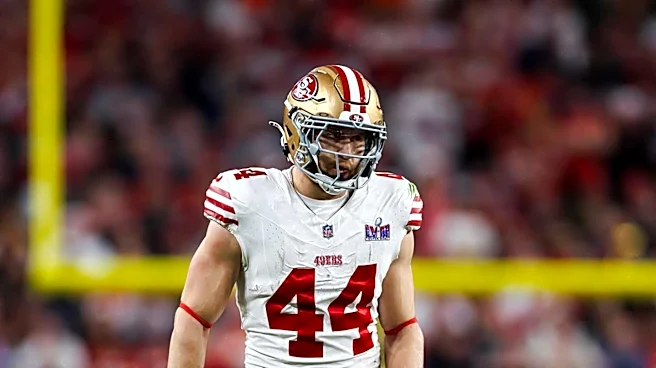
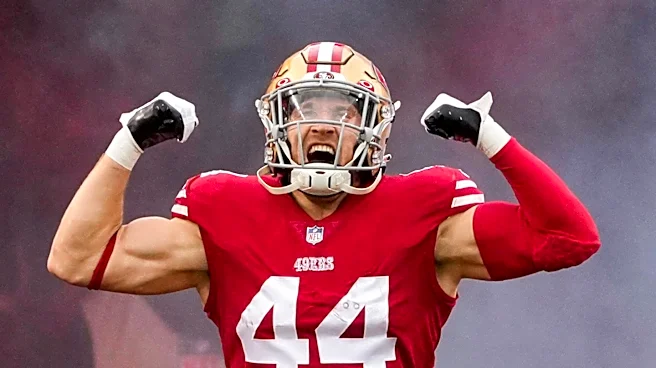
Kyle Juszczyk, a prominent fullback for the San Francisco 49ers, has expressed dissatisfaction with how his position is perceived during contract negotiations. Despite his versatility on the field, where he often plays as a tight end, Juszczyk is classified
as a fullback when it comes to contract discussions. This classification affects his pay rate, as fullbacks typically earn less than tight ends. Juszczyk, who has been a key player for the 49ers, participating in 45% of the team's offensive snaps last season, signed a two-year, $8 million extension in March. This deal is comparable to that of backup tight end Jake Tonges, despite Juszczyk's significant contributions to the team. Juszczyk's frustration highlights the broader issue of positional value in the NFL, where players' roles on the field may not align with their contractual designations.
Why It's Important?
The situation underscores a common challenge in the NFL regarding player valuation and compensation. Fullbacks, like Juszczyk, often play multiple roles but are not compensated accordingly due to their primary position's lower market value. This discrepancy can lead to dissatisfaction among players who feel their contributions are undervalued. For teams like the 49ers, which utilize fullbacks extensively, this could impact player morale and retention. The issue also raises questions about how the NFL and its teams assess and reward player versatility, potentially influencing future contract negotiations and player development strategies.
What's Next?
As Juszczyk approaches the end of his career, the 49ers and other NFL teams may need to reconsider how they evaluate and compensate versatile players. This could involve redefining positional roles or adjusting pay scales to better reflect players' on-field contributions. Additionally, Juszczyk's comments may prompt discussions within the league about the broader implications of positional classifications on player contracts. Teams might also explore new strategies to retain key players who feel undervalued under the current system.