




What's Happening?
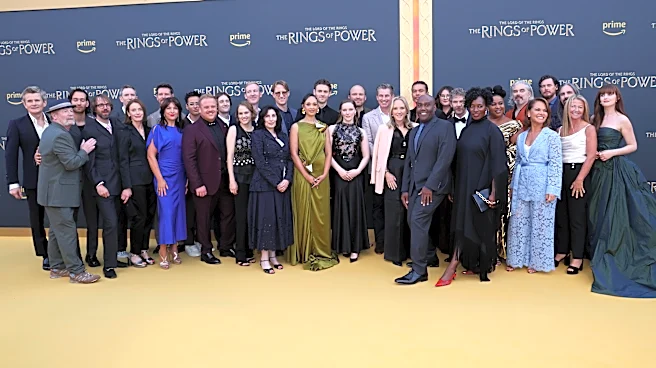
Episode 6 of 'The Rings of Power' Season 3 has generated significant criticism for its perceived deviations from J.R.R. Tolkien's original works. Reviewers highlight several plot points as particularly problematic, including Sauron taking on Galadriel's
appearance to kiss Celeborn for information, a scene described as 'utter blasphemy' to Tolkien's traditional Catholic-inspired writings. Other contentious elements include Elrond being portrayed as a pacifist diplomat, contrary to his canon involvement in battles, and the depiction of the dwarves' storyline as 'boring.' The episode also features Sauron using a 'printing press' as a torture device and Gil-galad healing Miriel's blindness with his ring, which critics argue are inconsistent with the established lore. The review concludes with a rating of 0/10, asserting that the show is a 'total desecration to Tolkien's legacy.'
Why It's Important?
The strong negative reaction to 'The Rings of Power' Season 3, Episode 6, underscores the deep reverence and protective sentiment many fans hold for J.R.R. Tolkien's Middle-earth legendarium. Deviations from established lore, particularly those involving central characters like Sauron, Galadriel, and Elrond, can alienate a significant portion of the audience who value fidelity to the source material. The criticism highlights a broader tension in adapting beloved fantasy series: the balance between creative interpretation and honoring the original author's vision. For Amazon, the show's reception directly impacts its investment in the 'Lord of the Rings' franchise, potentially affecting future seasons and spin-offs. The perceived 'romantasy' elements and plot inconsistencies, as described by critics, risk diminishing the show's credibility among long-time Tolkien enthusiasts and could influence its long-term cultural impact and commercial success.
What's Next?
The ongoing criticism surrounding 'The Rings of Power' suggests that future episodes and seasons will continue to be scrutinized for their adherence to Tolkien's lore. The showrunners face the challenge of either addressing these concerns through narrative adjustments or continuing with their creative interpretations, potentially further polarizing the audience. The strong fan reactions could influence Amazon's strategy for the series, possibly leading to internal discussions about the direction of the show. The debate over 'Tolkienian' authenticity versus modern storytelling approaches is likely to persist, shaping discussions around the series' legacy. The show's ability to attract new viewers while retaining the loyalty of existing fans will depend on how it navigates these creative and critical challenges in its upcoming installments.
Beyond the Headlines
The controversy surrounding 'The Rings of Power' extends beyond mere plot points, touching upon fundamental questions of artistic ownership and adaptation ethics. When a work as culturally significant as Tolkien's 'Lord of the Rings' is adapted, it enters a complex dialogue between the original creator's intent and the new creators' vision. The accusation of 'blasphemy' reflects a sentiment that certain narrative choices not only alter the story but also betray the philosophical and moral underpinnings of the original work. This situation highlights the power of established fandoms in shaping the reception of adaptations and the potential for significant backlash when those expectations are not met. It also raises questions about the commercial pressures on studios to modernize or broaden the appeal of classic narratives, sometimes at the expense of their core identity, leading to ongoing debates about what constitutes a 'faithful' or 'good' adaptation.