







What's Happening?
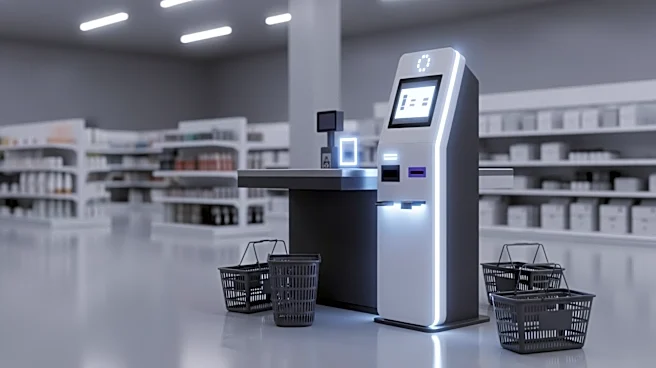
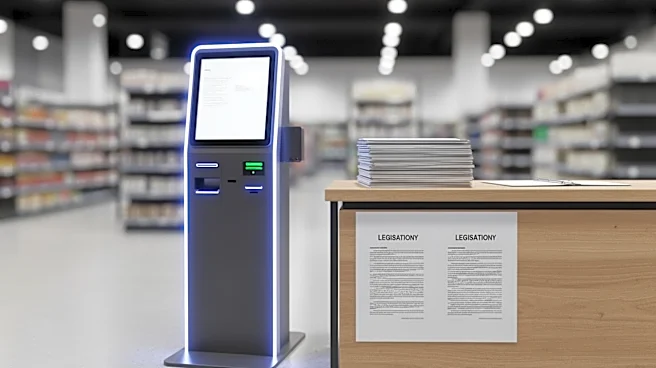
A recent study by ECR Retail Loss has revealed that self-service checkouts now account for 54% of retail transactions. The study, led by Professor Matt Hopkins from the University of Leicester, analyzed data from 39 retailers with a combined annual turnover
exceeding €1 trillion. It found that while self-checkouts have grown in popularity, they also contribute to increased store losses, with shrinkage rising by 22% on average in the first year of implementation. These losses stem from both customer errors and intentional theft, with estimates of the latter varying widely. The study suggests that interventions such as prompts, exit gates, and personal display monitors can help mitigate these losses.
Why It's Important?
The findings of this study are significant for the retail industry as they highlight the dual nature of self-checkouts: while they offer convenience and efficiency, they also pose challenges in terms of loss prevention. Retailers must balance the benefits of self-checkouts with the need to address shrinkage effectively. The study underscores the importance of designing systems that facilitate accuracy for customers, which can help reduce losses. This has implications for retail strategies, as businesses must invest in technologies and processes that minimize errors and deter theft, ultimately impacting their bottom line.
What's Next?
Retailers are likely to continue exploring and implementing technological solutions to address the challenges associated with self-checkouts. This may include further development of systems that enhance customer accuracy and reduce opportunities for theft. Additionally, retailers might invest in staff training to better assist customers using self-checkouts, thereby improving the overall shopping experience and reducing errors. As the retail landscape evolves, businesses will need to adapt their strategies to leverage the benefits of self-checkouts while minimizing associated risks.