





What's Happening?
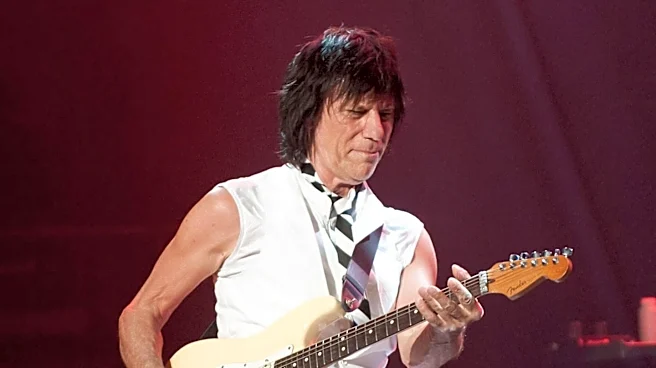
In the 1960s, guitarist Jeff Beck was approached by John Mayall to join the Bluesbreakers, following Eric Clapton's departure. Despite the opportunity, Beck declined, preferring to explore a more experimental rock sound rather than the blues-heavy direction
of the Bluesbreakers. Beck's decision was influenced by his desire for creative freedom, which he felt would be limited in Mayall's band. Instead, Beck continued to innovate within the Yardbirds and later pursued a successful solo career, becoming a pivotal figure in rock music.
Why It's Important?
Jeff Beck's decision to decline the Bluesbreakers offer highlights a significant moment in rock history, emphasizing the importance of artistic freedom and innovation. Beck's choice allowed him to develop a unique sound that contributed to his legacy as a rock guitar legend. This decision also underscores the broader cultural shift in the 1960s, where musicians increasingly sought to break away from traditional genres to create new and diverse musical expressions.
Beyond the Headlines
Beck's refusal to join the Bluesbreakers reflects a broader trend of musicians in the 1960s who were pushing the boundaries of established genres. This period was marked by a cultural revolution in music, where artists sought to express individuality and creativity. Beck's career trajectory exemplifies the impact of these changes, as he became known for his innovative guitar techniques and contributions to the evolution of rock music.