






What's Happening?
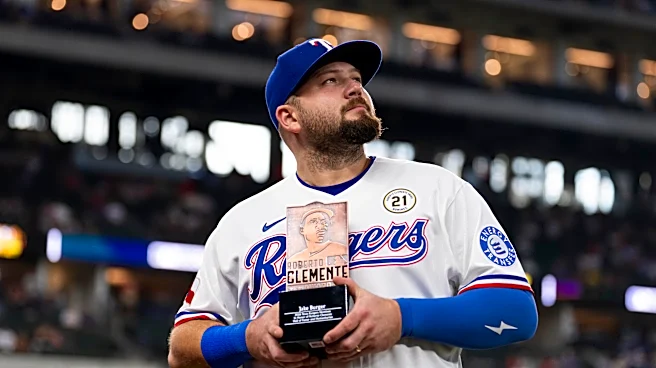
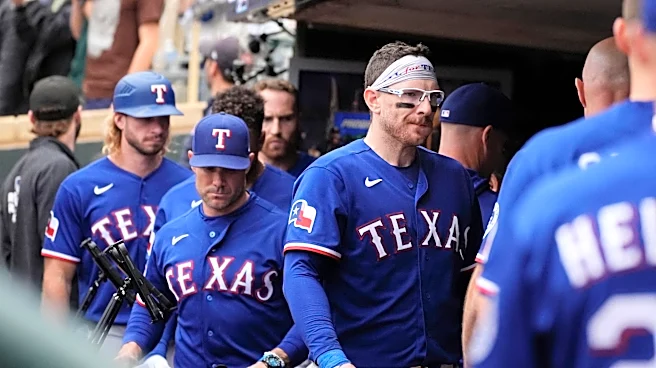
The Texas Rangers are entering the offseason with significant challenges concerning their offense and bullpen, according to General Manager Chris Young. Following a season that saw the team contend for a postseason spot until the final game, the front
office is now tasked with making critical decisions. Young has hinted at a strategy to make the team 'younger and more athletic,' which could involve trading high-salaried players to reduce payroll and enhance offensive capabilities. The team's offense has consistently struggled, particularly at Globe Life Field, despite a strong starting rotation. Additionally, the Rangers' coaching staff may undergo evaluation as part of the broader organizational review.
Why It's Important?
These offseason decisions are crucial for the Texas Rangers' future competitiveness and financial health. The potential move to trade 'big-money players' signifies a strategic shift, aiming to shed payroll and inject new talent into a struggling offense. This could impact player contracts, team chemistry, and fan engagement. A focus on becoming 'younger and more athletic' suggests a long-term rebuilding or retooling effort, moving away from a veteran-heavy roster. The evaluation of the coaching staff indicates accountability and a desire for improved performance, which could lead to significant changes in leadership and strategy. The success or failure of these moves will determine the Rangers' trajectory in upcoming seasons and their ability to consistently contend for the postseason.
What's Next?
The Texas Rangers' front office will proceed with evaluating potential free agents, trade opportunities, and roster adjustments. General Manager Chris Young's comments suggest that difficult decisions regarding current players, particularly those with large contracts and no-trade clauses, are on the horizon. The team will need to identify specific free-agent targets and trade partners to address their offensive and bullpen weaknesses. Additionally, an assessment of the coaching staff is expected, which could result in changes to the team's leadership structure. These actions will shape the Rangers' roster for the upcoming season, with a clear emphasis on improving offensive production and overall athleticism.
Beyond the Headlines
The Rangers' stated goal of becoming 'younger and more athletic' carries deeper implications beyond immediate roster changes. It suggests a philosophical shift in team building, potentially prioritizing long-term development and sustainable success over short-term veteran acquisitions. This approach could lead to a more dynamic and adaptable team, but it also presents challenges in managing player expectations and navigating complex contract situations, especially with players who have no-trade clauses. The emphasis on youth and athleticism might also reflect a broader trend in professional sports towards faster, more versatile rosters. The success of this strategy could influence other MLB teams facing similar challenges with aging rosters and high payrolls.